
Traffic Case Records in Cache County
Citations in Cache County come from the Utah Highway Patrol, the Cache County Sheriff, and municipal police. Read the ticket closely. It names the court or location. It cites the statute or code, gives instructions, and sets either a response deadline or a court date. Many infractions and parking matters never require an appearance, and payment online or by mail is often allowed. The citation controls. Not every court participates in ePayment.
There is no Cache County justice court. Instead, municipal justice courts handle much of the traffic, infraction, ordinance, and Class B or C misdemeanor docket within their own jurisdiction, and Logan City Justice Court is one example. District-level matters and transferred workloads can also reach the First District Court in Logan. A city name printed on a citation does not prove that a separate city court still holds the case, since local courts can dissolve or transfer matters.
Cache County Traffic Court Routing
Start with the issuer and the court printed on the citation. For current routing, the Utah Courts directory lists Cache County court locations. Court lines shift more than people expect. The 2025 SJR 1 record approved dissolving the North Logan and Hyde Park justice courts. Their workload moved to First District Court. That is why an old city listing may point to the wrong counter.
| Matter | Likely court route | Confirm with |
|---|---|---|
| City traffic or ordinance | Applicable municipal justice court or successor court | Citation and current directory |
| Infraction or Class B/C misdemeanor | Justice court, subject to local assignment | Court named on citation |
| Transferred city workload | First District Court in Logan when officially transferred | Directory and local clerk |
| Class A or more serious charge | First District Court | District docket and court notice |
What if the printed court and the online directory disagree? Call the court instead of sending payment to a guessed location.
Cache County Traffic Ticket Lookups
For a docket search, start with the official Utah ePayments route. Plug in the citation number or court case number. Type any letters exactly as printed. The results can show the case, the name, the court, and the total balance. Verify the name and court before adding an item. Remember that a balance screen is just a payment tool. XChange and the court calendar supply the broader case and setting history.
- Read the citation’s court, location, number, and response date.
- Search ePayments by citation number or case number if that court participates.
- Use XChange to inspect public case history and the Utah Courts calendar to check a setting.
- Call the named municipal court or First District Court if no online result appears.
- Visit the proper clerk counter or public terminal for in-person help.
- For a lost ticket, contact the issuing agency, then confirm the court assignment.
The official ePayment instructions show the case and citation lookup route.
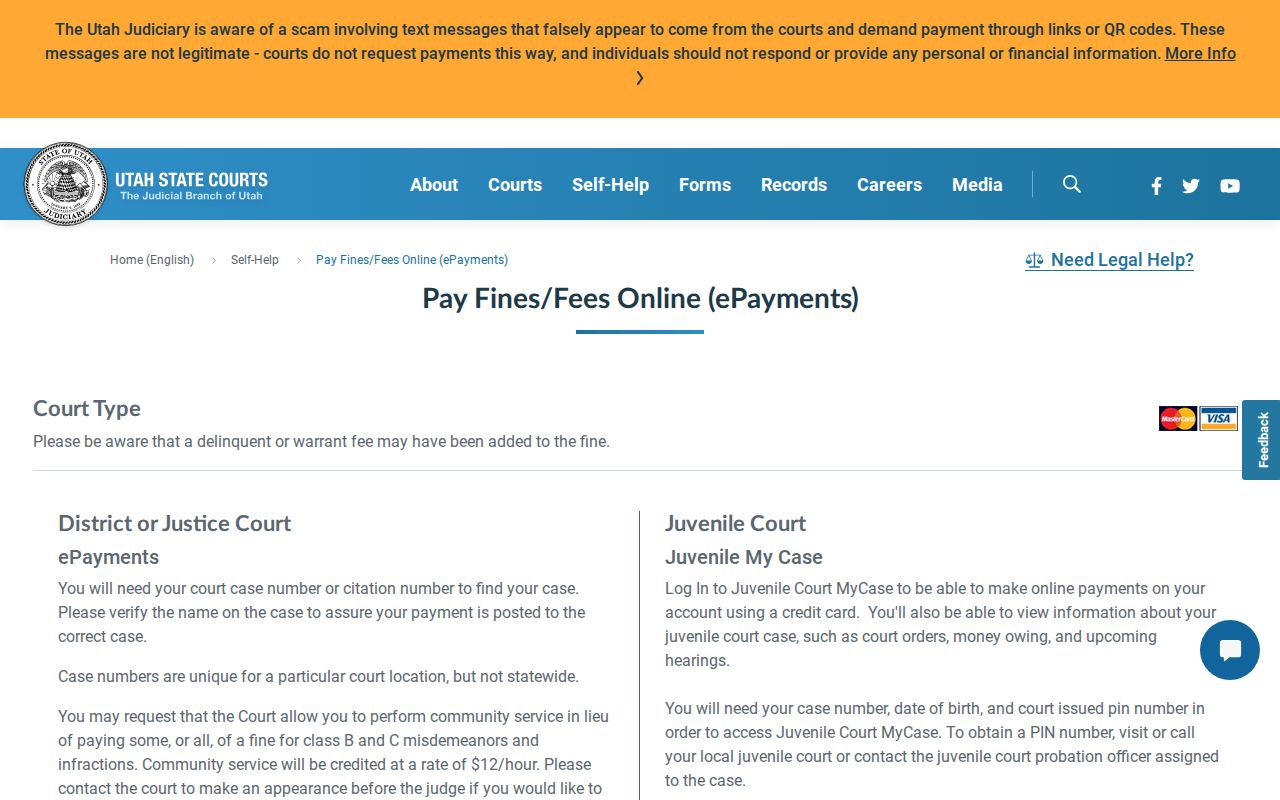
The screen only works after the citation reaches a participating court and the number you enter matches.
| Field or control | Type | Requirement | Purpose |
|---|---|---|---|
| Case number | Text | Required for case path | Retrieves the case and balance |
| Citation number | Text | Required for citation path | Include letters as printed |
| Court | Result or selector | Unspecified | Confirm the court shown |
| Search by Case/Citation | Control | Choose one path | Runs the selected lookup |
| Proceed to Payment | Button | Final step | Moves a verified item to payment |
When Cache ePayment Fails
Not every court uses Utah ePayments. A brand-new citation may also sit unprocessed until the agency and the court enter it. A blank result is not a dismissal. Check the citation for mail or in-person instructions. Then call the named court and lean on the current court directory. The First District Court in Logan can be reached at 435-750-1300, and Logan City Justice Court is listed at 435-716-9300 for its matters.
Lost the ticket? Contact the law-enforcement agency that issued it. The agency can help identify the citation and the intended court. City or county citations should be traced through that agency and the court, not reconstructed from a guessed statewide format. Public materials state no universal Cache citation pattern, so keep the number exactly as printed instead of converting it to YYYY-XX-#####.
Note: Online payment is one response channel, while mail, phone, the court counter, XChange, and the calendar remain essential fallbacks.
Traffic Court Dates in Cache County
Your citation may list a response deadline rather than a hearing. If a court setting exists, check two things. Compare the ticket against the public court calendar and the newest XChange entry. Utah's calendar lets you search by case number, party, judge, attorney, date, and location. It updates on weekdays at about 5:30 a.m. When a date has moved, a call to the court is still the safest confirmation.
| Citation or case number | Use the exact printed value; no universal public format is specified |
|---|---|
| Court and location | The municipal justice court, successor court, or First District Court holding the case |
| Date and time | Current appearance, arraignment, pretrial, or other setting |
| Judge and courtroom | Displayed when entered in the calendar |
| Appearance type | In-person, hybrid, or remote information where shown |
| Status | Read with the case history, not from an obsolete calendar line |
A hearing that was continued or passed still counts as history, so hunt for the replacement setting. When two dates conflict, contact the court before you appear or pay.
Cache Traffic Statistics in Context
Official FY2023 justice court statistics recorded 13,544 Cache County filings and 13,398 dispositions across reporting locations. Logan City Justice Court alone accounted for 7,448 filed cases, including 5,965 traffic filings. North Logan reported 602 traffic filings. Wellsville reported 2,797. Treat these as fiscal-year workload counts. They are not a list of courts currently open and not a forecast for any single case.
Those figures explain why court selection matters in Cache County. They cannot tell you whether a citation posted, whether a hearing moved, or whether a court later dissolved.
Paying a Ticket vs Fighting It
Every ticket ends in a choice. The official Utah Courts traffic page lays out the basics: pay by the cited deadline if you accept the ticket, or appear, plead not guilty, and ask for the court process if you contest it. Be aware that payment can amount to a plea and disposition. Fighting the citation does not erase it; it just creates further settings.
The state traffic instructions on that page spell out each step.
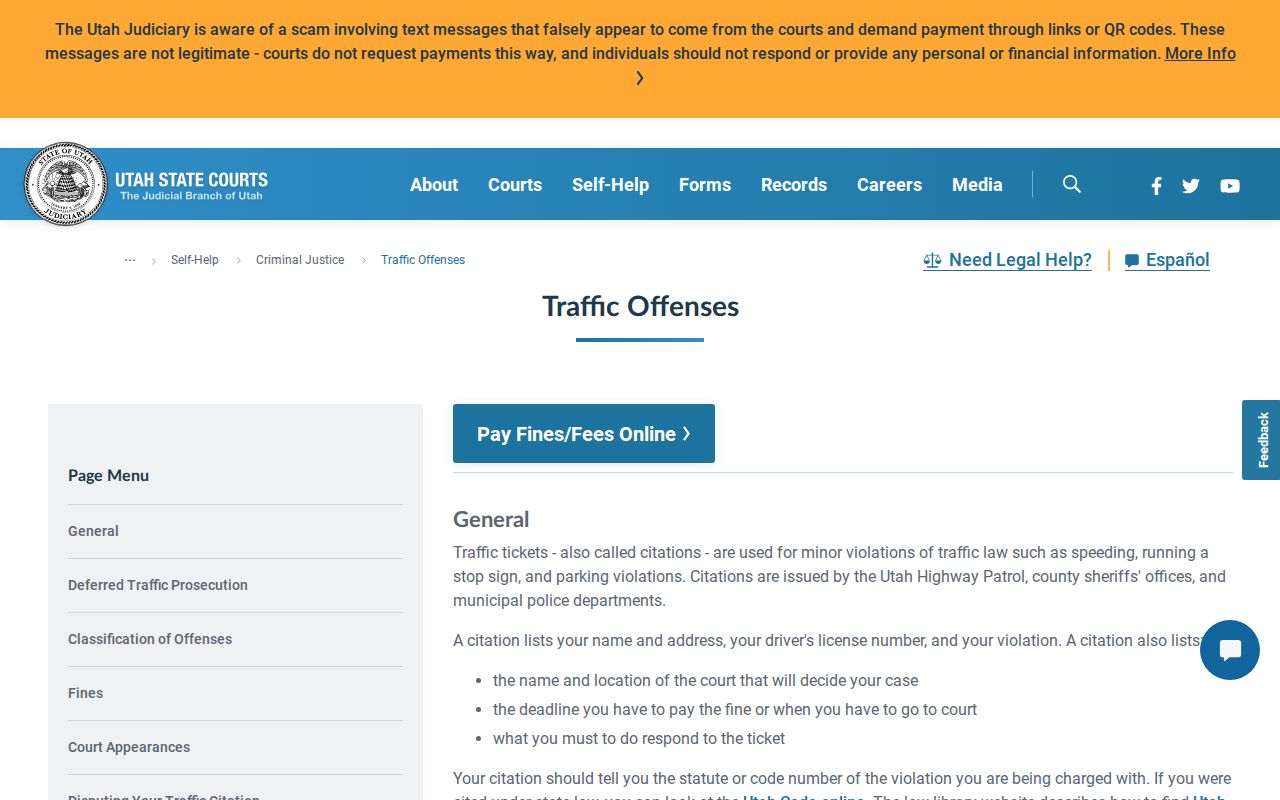
The citation and the court control which responses are permitted, so read the general state page alongside the actual ticket.
| Pay | Contest |
|---|---|
| Follow the citation’s official online, mail, or counter route | Enter a not-guilty plea through the court’s accepted process |
| Verify court, case, name, and amount before submitting | Receive or confirm a hearing or trial setting |
| Meet the citation’s payment or response deadline | Meet the same controlling response deadline |
| Case history can record the plea, payment, and disposition | Case history can record the plea, settings, rulings, and outcome |
Missed response or court date: Utah Courts warns that failure to respond can lead to a warrant and license suspension. Contact the court at once to determine status, added fees, and the proper next step.
Cache Deferred Traffic Timeline
Deferred Traffic Prosecution is a real Utah program with fixed rules. Not every Cache County traffic ticket qualifies for it. Timing matters most. A driver must register after at least five days and within 21 days. The driver enters a no contest plea and pays a $5 registration fee. The fine comes due at that point or within 14 days. When traffic school is required, the listed online course must be finished within 28 days. A one-year clean period follows. The official program page sets out each step, condition, and fee.
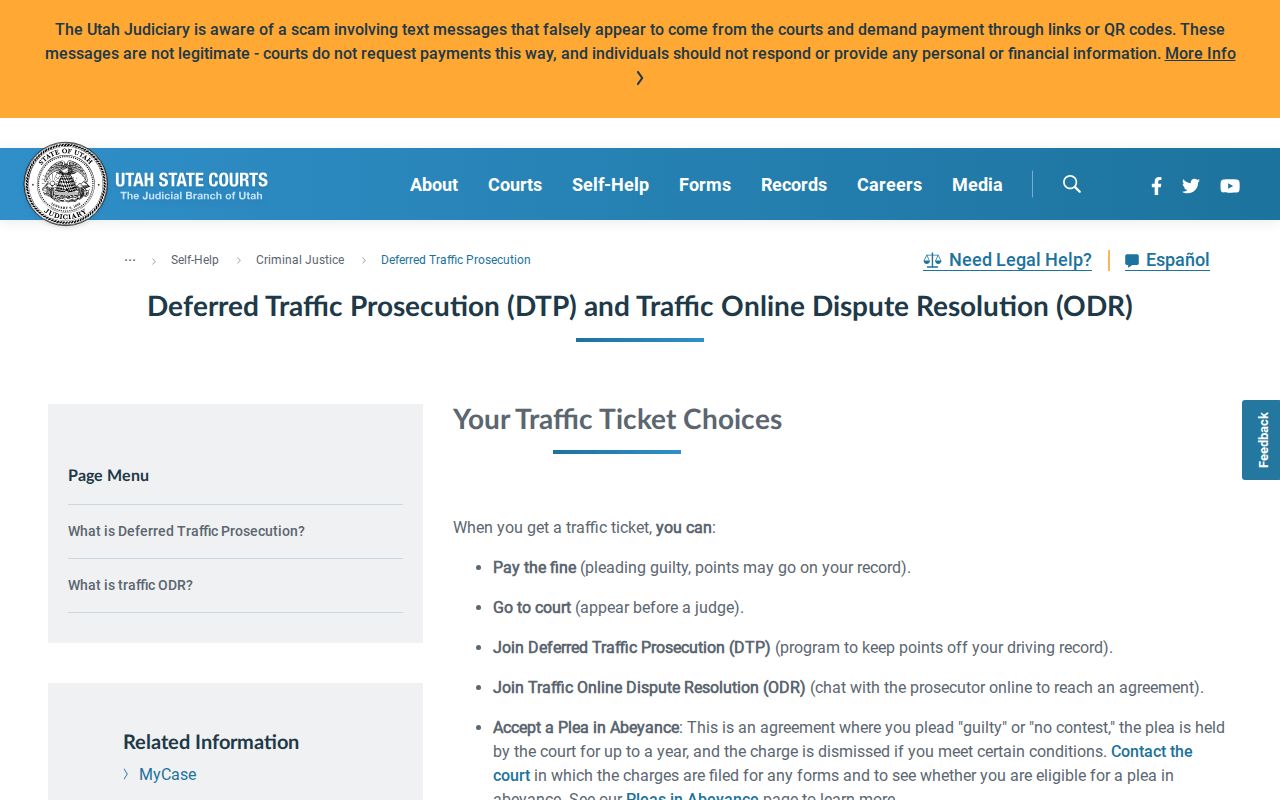
Finish everything and the deal pays off. The court lets the person withdraw the plea and dismisses the case. Payments and the registration fee are not refunded. Eligibility hinges on age, license type, record, and the offense charged. A valid Utah non-CDL license is one listed condition, and DUI cases are out. Plea in abeyance works differently. It is a separate court process that holds a plea while conditions run, and it does not automatically expunge anything. The written court order and its case-specific terms always control.
Two Records: Court File and Driver File
A Cache County traffic case record lives with the court, and where public it can show the citation, the charge, the plea, filings, settings, the disposition, fine payments, a warrant, or a failure-to-appear entry. The driver file is different. A motor-vehicle record sits under the Utah Driver License Division's own privacy and release rules. It cannot substitute for a court docket search.
| Point | Court traffic record | Driver file |
|---|---|---|
| Custodian | First District or applicable municipal justice court clerk | Utah Driver License Division |
| Purpose | Tracks the citation as a court case | Maintains the state licensing record |
| Contents | Plea, dates, filings, disposition, fines, and public orders | Licensing data subject to DLD rules |
| Access | XChange, calendar, ePayment, counter, or record request | DLD-authorized release route |
The official DLD privacy page explains its separate record regime.
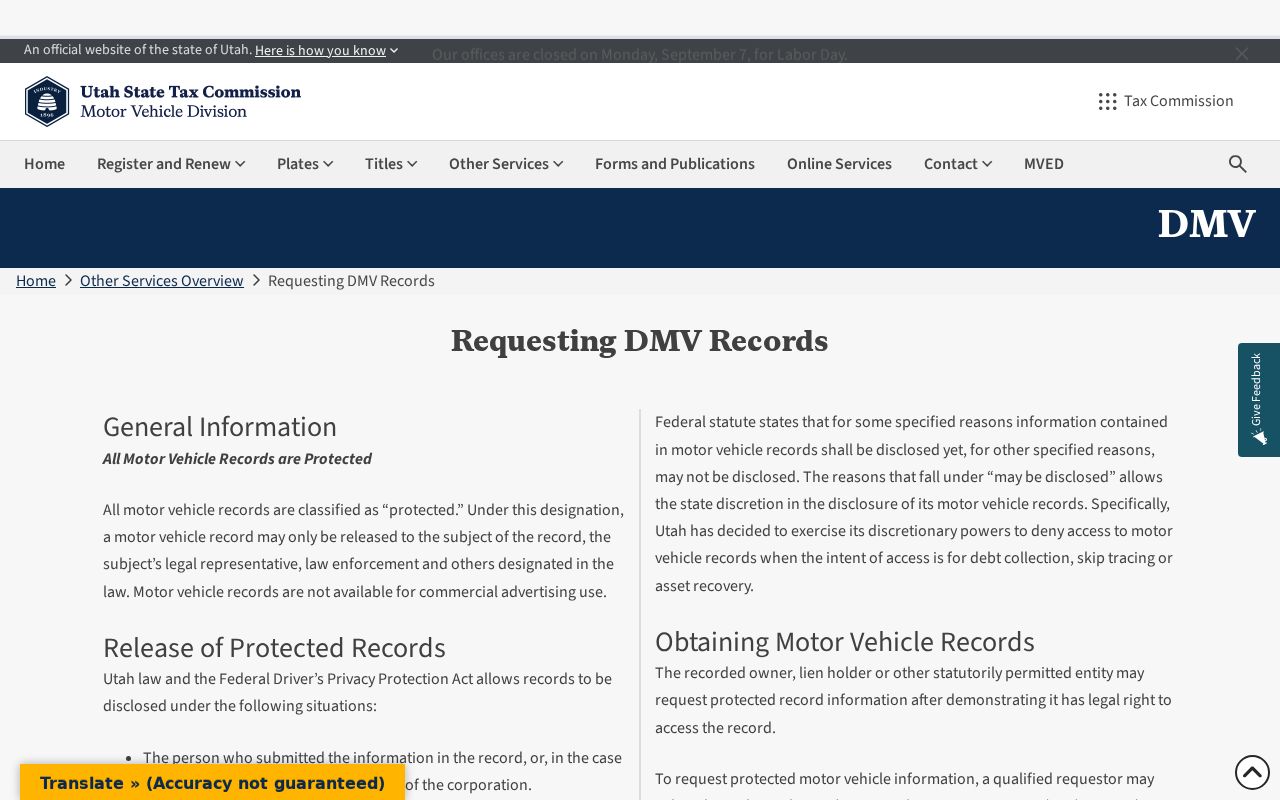
For the court date, the case outcome, or a filed order, stick with Utah Courts and the clerk who maintains the case.
Cache Lost Citation Steps
A lost ticket starts with the agency that wrote it. Call the Utah Highway Patrol, the sheriff, or the municipal police agency named on the stop or notice. Ask for the citation identifier and the intended court. Then confirm that court through the directory. If the citation has not posted yet, its clerk is the one to call.
Do not sit on a blank portal search past the response date you remember. Write down each agency and court call. But let the clerk give you the live case status. When the matter is public and you need paper, request that exact traffic case record instead of a broad search.
Cache Traffic Docket Terms
A setting is a scheduled court event. A disposition is the recorded outcome. A continuance moves a setting to a new date but leaves the old entry sitting in the docket history. An FTA, or failure-to-appear entry, is the one term that calls for prompt contact with the court.
- Setting
- A scheduled court event.
- Disposition
- The recorded resolution.
- Continuance
- A moved court setting.
Read each term with the latest dated entry and the court notice.
Traffic Record Copy Fees
Copies of a traffic case fall under Utah's court-record fee structure. Order from the court that keeps the case. A plain sheet, a certified disposition, an XChange image, and a hearing recording are separate products. They carry separate prices. Page count, delivery, staff time, and certification can all shift the total. Confirm the full amount before you order.
| Item | Current fee | Note |
|---|---|---|
| Plain paper copy | $0.25 per sheet | Request-page rate |
| Certified copy | $4 per document plus $0.50 per page | Clerk authentication |
| Exemplified copy | $6 per document plus $0.50 per page | Higher certification form |
| XChange image | $1 per document | Where a public image is available |
| Fax or email | $5 through 10 pages, then $0.50 per page | Not used for records already on XChange |
| Actual cost | Confirm with the court |
When you request copies, the official Utah Courts fee schedule is the final word. Filing a case and buying a copy are two different charges.