
Cache County Civil Docket Searches
Utah Courts XChange is the starting point. Pick District Court for general civil, domestic relations, probate, and Cache small claims. Pick Justice Court only when an eligible claim belongs to an operating municipal justice court. A case number is the best key. Without one, XChange still works. It takes a last name or company. It also takes first-name letters, case type, search scope, and filing, disposition, or judgment dates.
Copy the number exactly as it appears on a notice or court record. Punctuation and spelling matter. The public instructions mark few fields as required. No stable Cache-specific case-number grammar is published. The official XChange help page allows a wildcard in prescribed name searches. Filtering by court plus case type keeps common names under the 500-result cap.
- Select District Court or Justice Court based on the filing court.
- Enter the exact case number, or use party and company fields.
- Narrow by Cache County, Logan location, case type, and date.
- Open the case number and read events from filing through the latest order.
- Check the calendar for a current hearing and request the document when the entry alone is not enough.
XChange is not the only door. Free public terminals at the courthouses give the same case-history access. The Cache County/Logan District Court clerk and records staff handle walk-in and formal record requests too. Call 435-750-1300. Or visit the court at 135 N 100 W, Logan, Utah 84321, for local routing. Very old material may sit with the court itself or with Utah State Archives.
Cache Small Claims Break the Pattern
Here is the local twist. Cache County has no county justice court. That upends the usual small-claims assumption. According to the Utah Courts small-claims instructions, Cache/Logan accepts all district case types, small claims included, yet an eligible claim can still land in a city justice court with the right location and jurisdiction. Picking the court is part of the docket search itself, not a detail to guess. The official jurisdiction page below sets out the statewide rule behind this local exception.
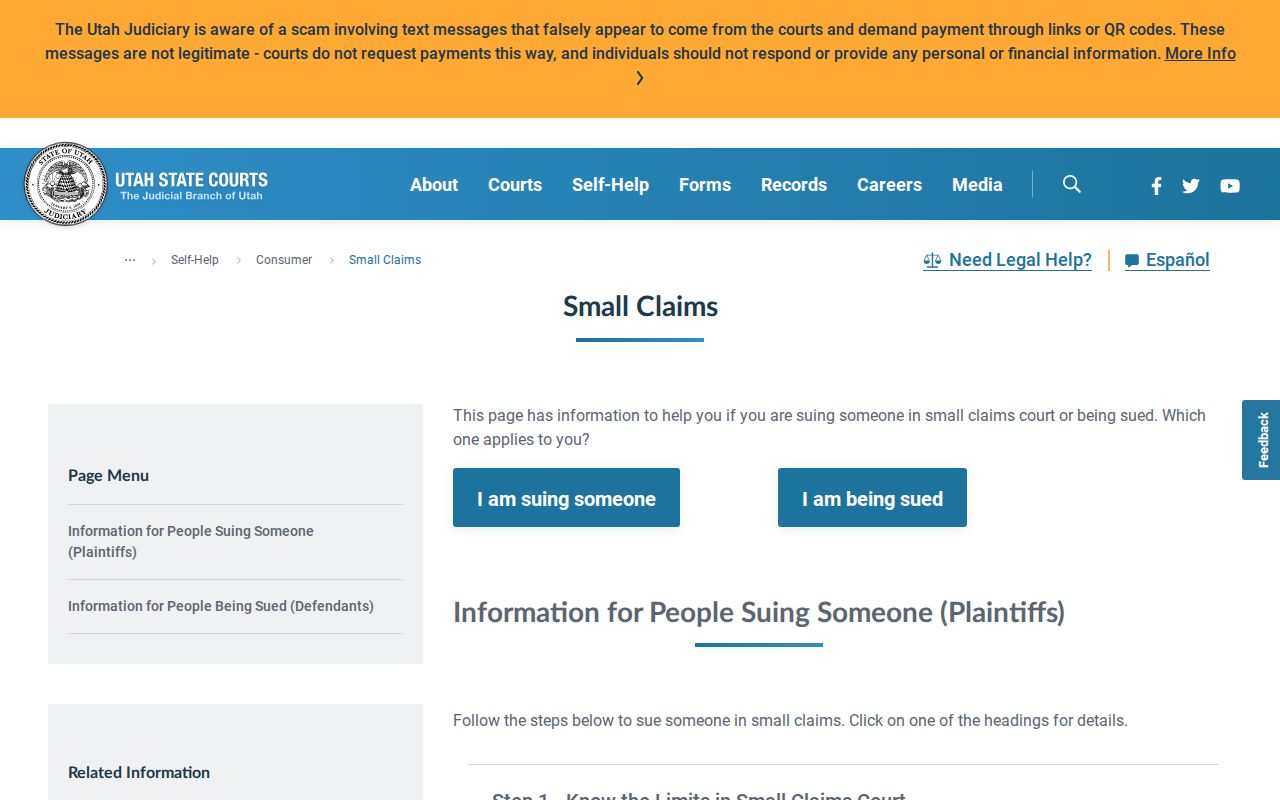
Check both the claim type and the court location before concluding that no Cache County civil docket exists. The Cache County Sheriff small-claims page helps with the practical side. It routes service questions to First District Court or Logan Municipal Court as appropriate.
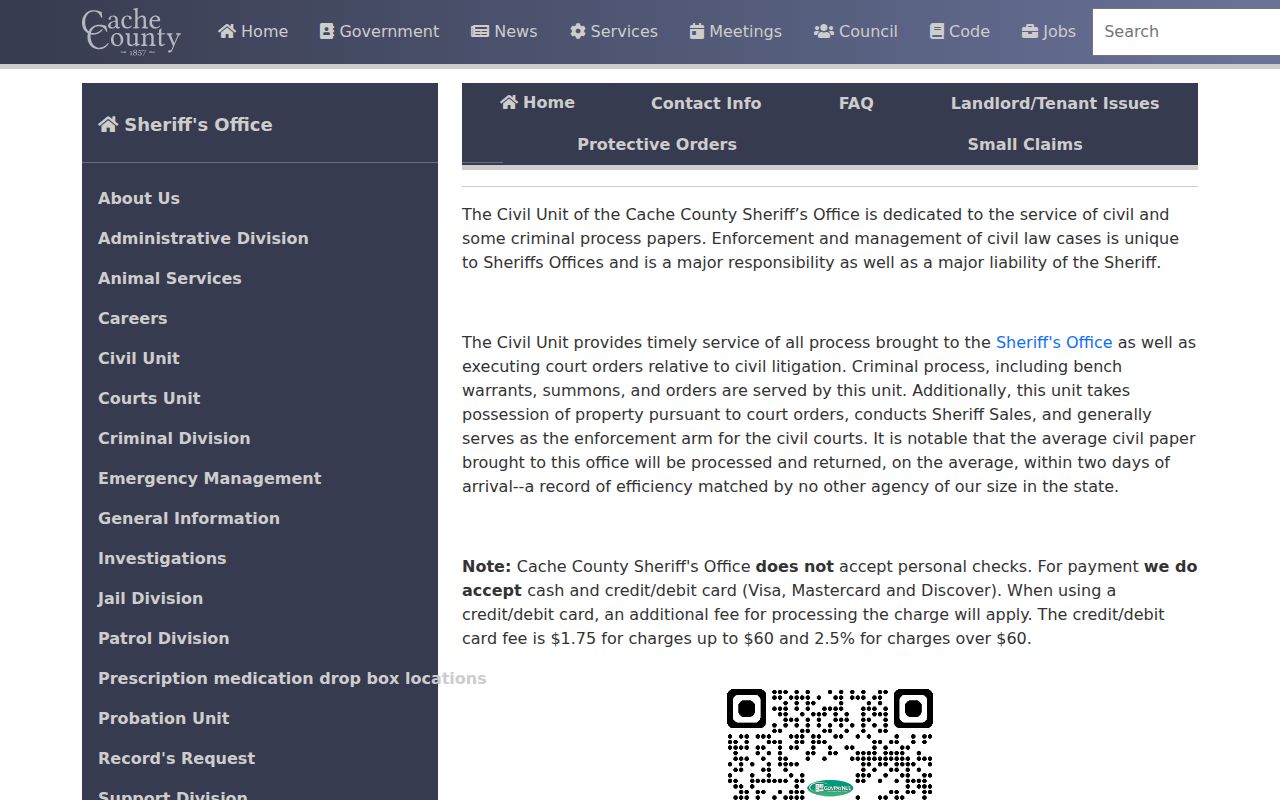
That page answers service questions for the right court. It is not a separate online docket database.
Civil Dockets: What They Show
A Cache County civil docket opens with a header and the parties. It then runs through a chronological register of actions. The header usually names the court, location, case number, case type, caption, filing date, assigned judge, and status. Party roles you might see include plaintiff, defendant, petitioner, respondent, claimant, creditor, debtor, trustee, or personal representative. Attorney relationships can appear as well.
| Opening filing | Complaint or petition that begins the civil matter. |
|---|---|
| Parties | Public names, role codes, and attorneys of record where allowed. |
| Case events | Answer, service, motion, response, notice, hearing, order, and appeal entries. |
| Settings | Date, time, court, judge, courtroom, and setting type when shown. |
| Outcome | Judgment, decree, satisfaction, dismissal, or other recorded disposition. |
| Documents | Public image links when available; certification requires the court process. |
Money may show up too. Fees, a judgment account, court costs, payments, or balances sometimes fill the accounting fields. The public help promises no standard amount-in-controversy field, so read any number there alongside the signed judgment or order.
Cache Civil Codes Narrow Results
Case-type codes sharpen any Cache County civil court docket search. The official XChange case-type list gives examples such as CN for contracts, DC for debt collection, EV for eviction, LM for lien or mortgage foreclosure, and SC for small claims. Tort codes cover automobile tort, medical malpractice, premises liability, and related categories. The official code list appears below.
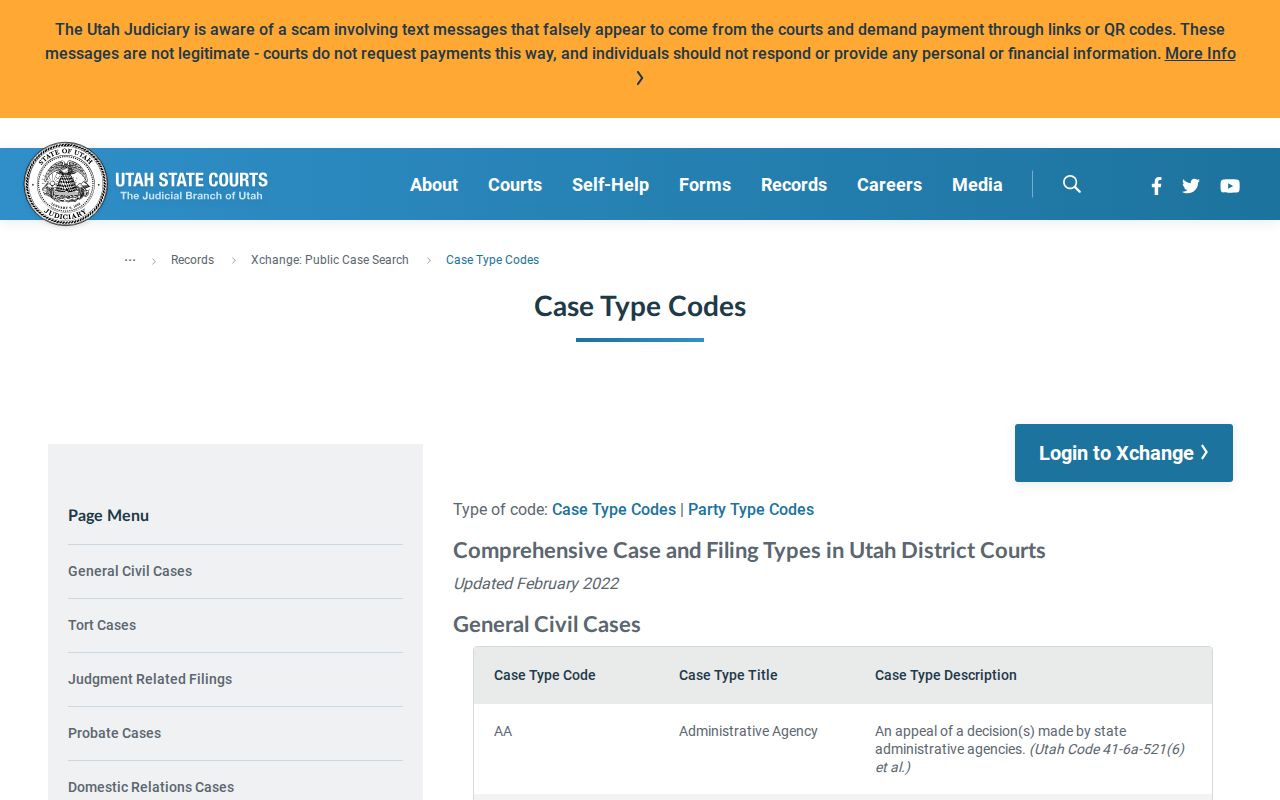
These labels just classify the proceeding. They say nothing about who prevailed, whether a claim was proved, or what relief the court ordered.
- PLA / DEF
- Plaintiff and defendant role codes.
- PET / RES
- Petitioner and respondent in a petition-based matter.
- CRE / DEB
- Creditor and debtor roles where the filing uses them.
- Judgment
- An enforceable decision resolving all or part of a claim.
What Cases Fill the Civil Docket
First District Court in Logan carries Cache County general civil, domestic, probate, and qualifying small-claims matters. XChange categories include contracts, debt collection, eviction, property and lien disputes, automobile torts, medical malpractice, premises liability, defamation, tax protest, water rights, and writ proceedings. A category steers the docket search. It does not summarize the claim's merits.
| Civil matter | Likely court | Public-access note |
|---|---|---|
| General civil or tort | First District Court | Public history subject to court rules |
| Probate | First District Court | Some protected content may be withheld |
| Domestic relations | First District Court | Private categories have narrower display |
| Small claims | District exception or eligible city justice court | Verify venue and current court status |
Domestic relations counts as civil, but it does not display like an ordinary suit. Divorce, custody, support, paternity, guardianship, conservatorship, civil stalking, and related categories can be private or partly private. Even so, public hearing minutes, orders, judgments, decrees, or letters of appointment may stay visible where the rules allow.
Cache Civil Filings Feed XChange
The Utah District Court Electronic Filing System submits documents; it is not a public search. Covered attorney filings in civil, domestic, probate, and criminal matters travel through electronic filing. Self-represented parties have their own routes, described in the official court instructions. Once a filing is accepted, it joins the court record and may produce an entry or eligible image in XChange. The filer-facing login shows on the official page below.
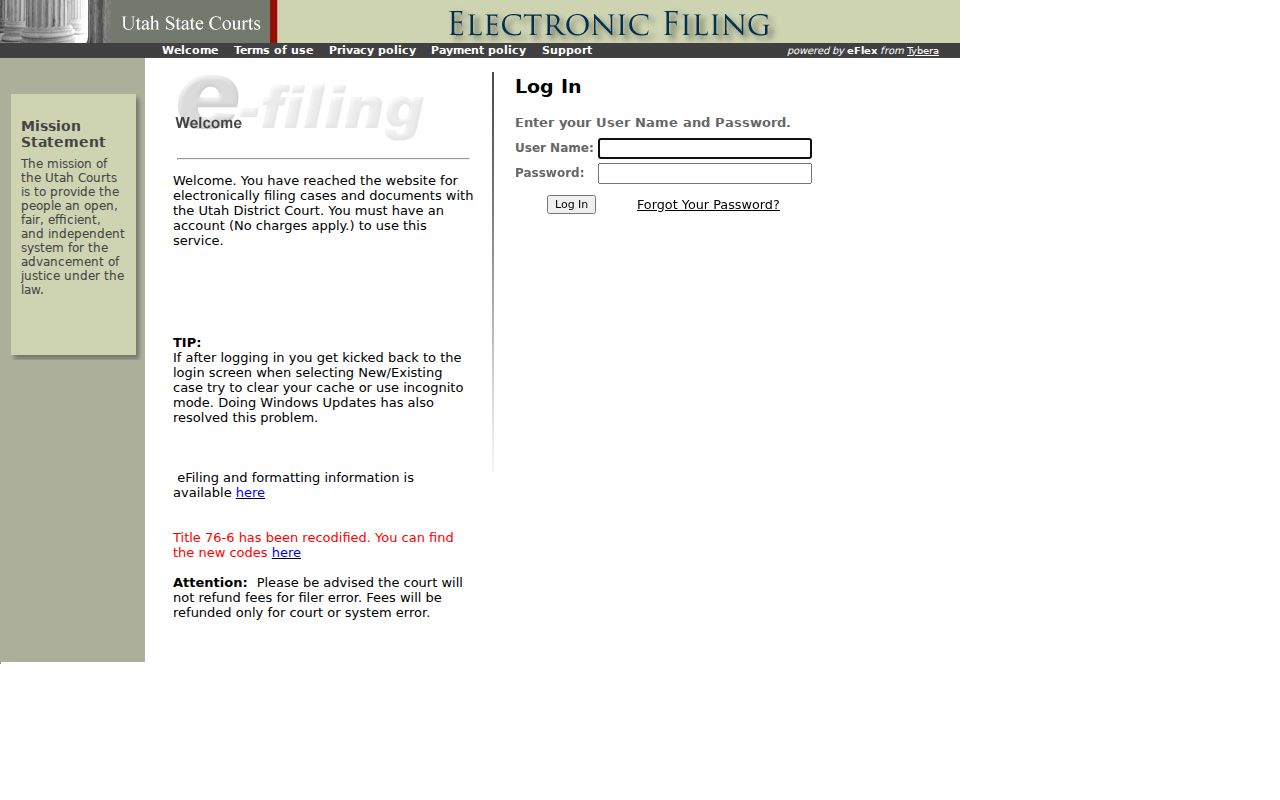
That screen is for submitting an authorized filing. It cannot replace the public Cache County civil docket search. The district e-filing scope page explains both attorney and self-represented routes.
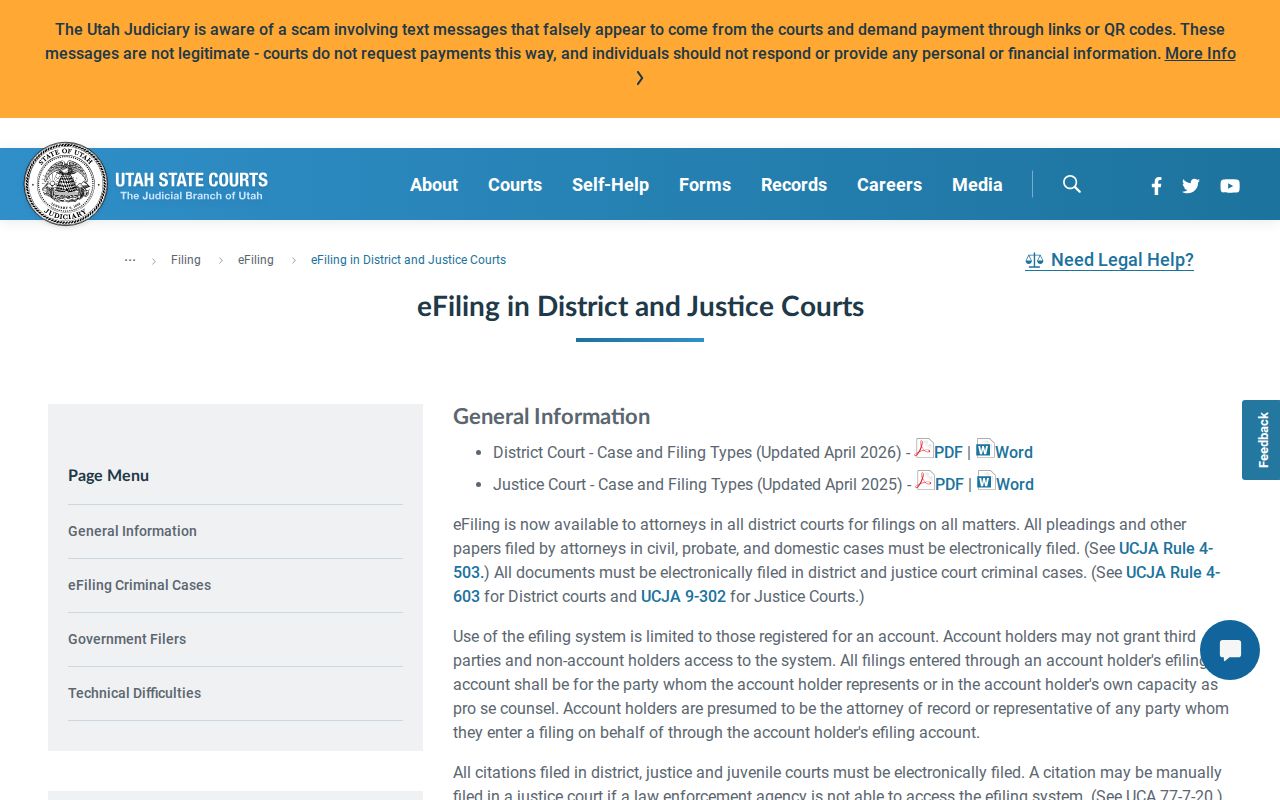
One delay trips people up. Submission and acceptance are separate steps. Search the court history for the accepted filing rather than treating an upload receipt as the public docket entry. Note: Filers must redact protected personal identifiers before a document reaches the public record.
Hearings on the Civil Docket
On a Cache County civil docket, a setting can take many forms. It might be a scheduling conference, a motion hearing, a settlement conference, a trial, a review, or something else the court names specifically. Past events stay in the docket history. For a current Cache County civil hearing, the Utah Courts calendar gives the sharper date-specific view. You can search it by case number, party, judge, attorney, date, and Logan location.
A continuance or reset means an earlier setting moved. It is not a dismissal. The old date often stays in the chronological record. So look for a later notice of setting, an order, or a calendar result before drawing conclusions. If the calendar and XChange history conflict, call the local court rather than trusting the older line.
The First District's annual report adds context here. It noted civil cases still waiting for trial dates even with settlement conferences in use. About 80 percent of cases that went through a judicial settlement conference settled. They settled on terms the parties accepted. That is district-wide context. It does not promise any single Cache County civil case will settle. Nor does it promise a set date.
Cache Civil Entries and Documents Differ
Three different products get confused here. A docket entry only says something happened. The filed document holds the actual words submitted to or signed by the court. A certified copy adds the clerk's authentication on top of that. So an entry reading "Order entered" is not the full order. And a public image pulled from XChange is not certified. Its source alone does not make it so.
| Need | Best channel | Result |
|---|---|---|
| Track case posture | XChange case history | Chronological public events |
| Read an available filing | XChange document image | Public image, $1 per document |
| Obtain official authentication | Court record request | Certified copy with applicable fees |
| Inspect older material | Local court or archives | Access based on custody and classification |
The Utah Courts request process usually answers within ten business days. Name the case, the court, and the document you want. Say how you want it delivered. Also state whether you need certification. The Cache County Clerk keeps county-government records. That office does not hold the First District civil docket.
Who Can See Civil Dockets
Utah Code of Judicial Administration 4-202.02 treats court records as public. Records that fall into a private, protected, sealed, or otherwise restricted class are the exception. Under Rule 4-202.03, anyone may access public records. Private and sealed records require an authorized basis. Public classification does not put every filed page online, though.
The official redaction rule sets out what must be stripped from filings before public release.
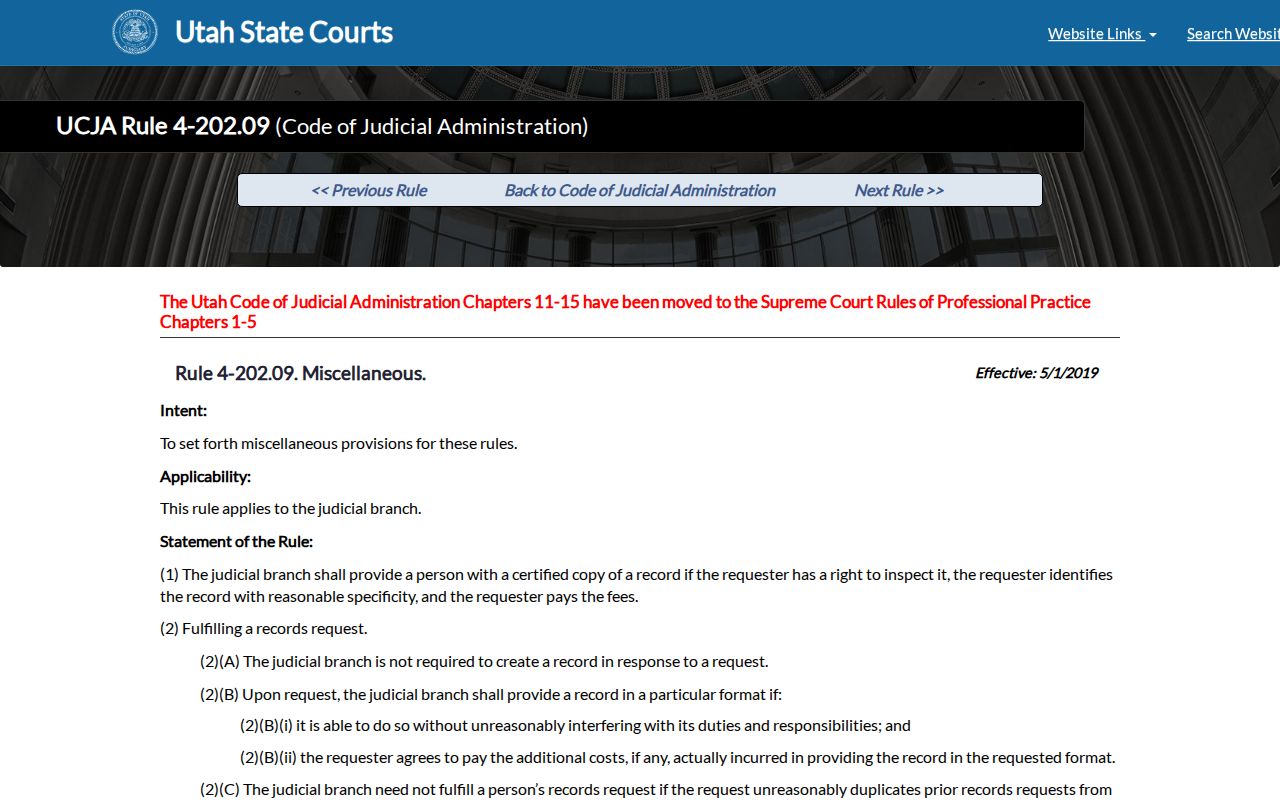
That rule explains a lot. Names, addresses, account details, and other identifiers can be removed from a Cache County civil record that is otherwise public.
Restricted record path: UCJA 4-202.04 supplies the motion or petition process for a person who lacks automatic authority but seeks a nonpublic court record.
A calendar search does not bypass classification. Neither does a broader name search. If a case should be public but is missing online, check the court scope, coverage, spelling, and date first. Then contact the court or submit a precise public-record request.
Verify Cache Civil Docket Outcomes
Read the civil sequence in order. It runs complaint or petition, answer, service, motions, notices, hearings, orders, judgment or decree, satisfaction, disposition, and any appeal. One balance line is not the judgment. One calendar entry is not the case file. One status label may lag behind a newer signed order. The best reading joins the chronology, the actual public document, and the current setting together.
Watch the caption, too. A city name there does not mean that city still runs the court. Cache County court dissolutions and workload transfers can put a municipality's matter on a Logan docket. So confirm the court location field and the current directory before you visit or call.
For a field-by-field lookup, the Cache County docket search breaks down each step. An entry may point to a filing that needs inspection or certification. The Cache County court case records process explains how to get it.