
Cache County Court Docket Searches
Most Cache County case hunting starts with Utah Courts XChange. It covers District Court and several participating justice courts. A precise case number is the strongest key. Party and business names work too, but narrow them by district or justice jurisdiction, Cache County, court location, case type, or date. The Utah Courts calendar is a separate tool. It confirms when and where a hearing is set, yet it is no substitute for a full docket or a certified record.
A thorough Cache County docket search uses every channel. Try XChange online first. Check the calendar, use the free XChange terminals at most district courthouses and some justice courts, call the court, stop at the counter, or file Utah's Request for Record form. For older matters, ask the clerk or the archives.
- Identify the likely court from the case type and city.
- Search XChange by case number, or use a name with a narrow court scope.
- Open Case History/Documents and read the location, status, roles, events, and settings.
- Check the calendar for the newest date, courtroom, judge, and setting type.
- Ask the maintaining clerk for help or a certified copy when needed.
Cache County XChange Search Keys
Scope drives everything in XChange, because the system reaches across all of Utah. Set it to district and you pull felony, Class A misdemeanor, general civil, domestic, probate, and Cache district small-claims cases. Set it to justice and you get municipal traffic, infraction, ordinance, lower misdemeanor, and eligible small-claims matters. Search Type narrows the hunt to cases or judgments. The filing, disposition, judgment, and warrant date panels help separate common-name results. The official XChange overview shows the Utah Courts public entry point.
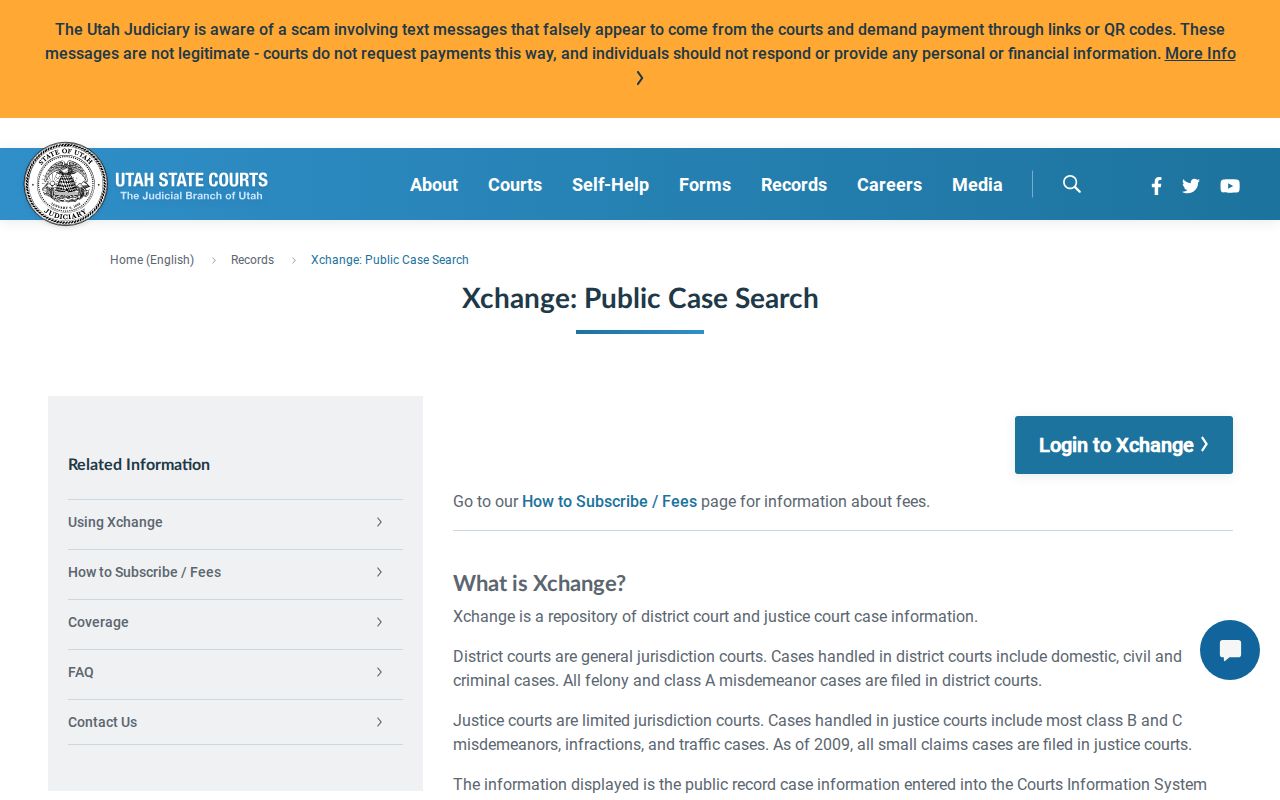
XChange is a state case-information layer, not a Cache County government database. Broad queries can stop at 500 results. Refine the search, since a missing name does not prove that no case exists.
| Control | Useful choice | Purpose |
|---|---|---|
| Jurisdiction | District or Justice | Separates district from municipal cases |
| Case number | Exact value | Avoids similar names |
| Party | Name or company | Finds a public case role |
| Court | Cache or city location | Handles local routing |
| Date | Relevant date panel | Narrows large sets |
Court Dockets: What They Show
A Cache County court docket traces a case from filing to finish. It names the court, case number, public parties, attorneys, and judge. Filing date, case type, event history, hearings, orders, disposition, and financial entries appear where they apply. None of that proves an allegation true. A charge is not a conviction. A motion is a request, not a ruling. A trial setting does not prove a trial took place.
XChange labels the chronological view Case History/Documents. A linked image is the paper behind an entry, and it costs separately. A certified copy stands apart because the clerk authenticates it. For the next setting, the calendar may hold more detail.
| Case number | The court's unique search key. |
|---|---|
| Parties | Public names paired with procedural roles. |
| History | Dated filings, notices, hearings, orders, and outcomes. |
| Setting | Date, time, judge, room, mode, and hearing label. |
| Documents | Separate public images when available. |
| Access | Limits for private, sealed, juvenile, or expunged material. |
Cache County Party Codes
Party codes explain how each person or group fits a case. They say nothing about who won. They also say nothing about whether an allegation holds up. Civil roles run from plaintiff, defendant, petitioner, and respondent to creditor, debtor, trustee, guardian, and personal representative. Criminal records may show a defendant, prosecutor, agency, or attorney. Weigh every role beside the case type and disposition. The Utah Courts party-role glossary explains those labels.
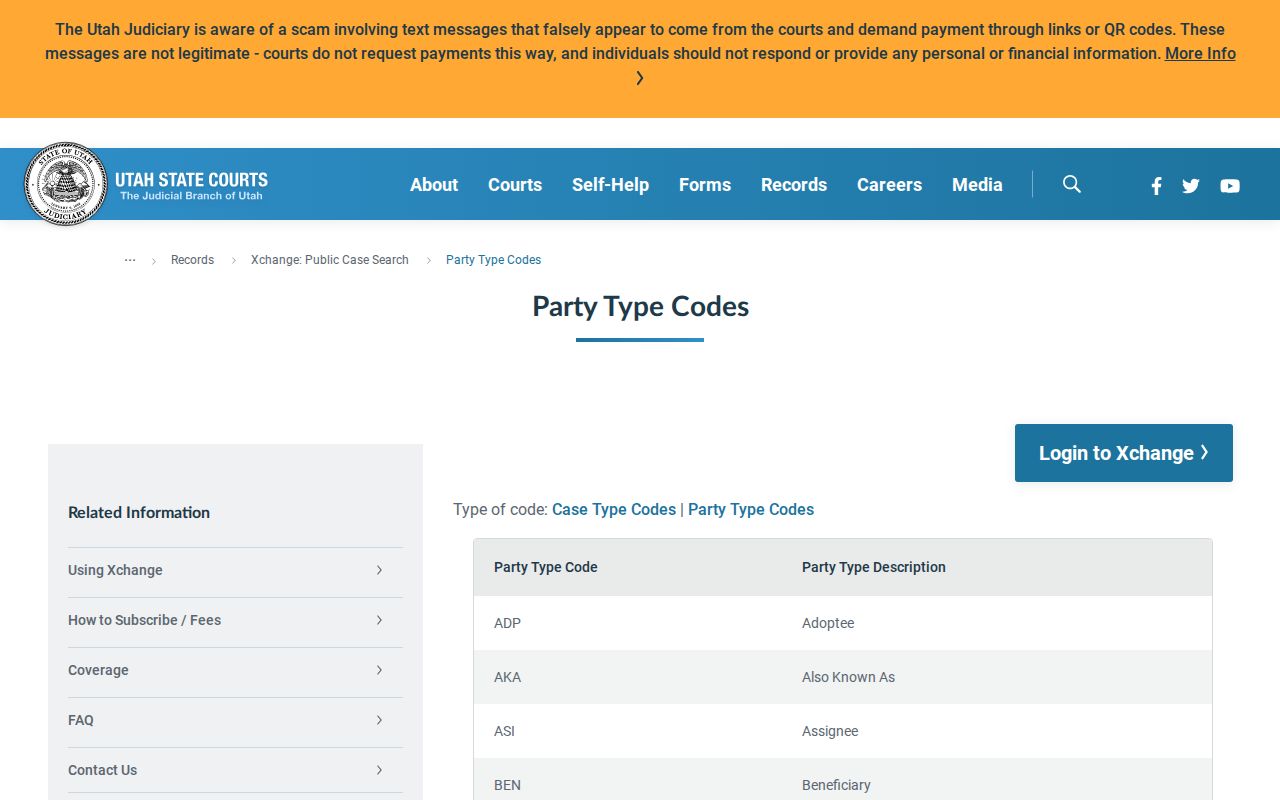
Match the case number, court, and date before turning to the glossary, which cannot replace the full public case history.
- Disposition
- The recorded resolution, which may differ by claim or count.
- Setting
- A scheduled event, not always a trial.
- Continuance
- An order moving a proceeding.
- Judgment
- A formal court decision.
Cache County Courts and Dockets
First District Court in Logan carries the heavy caseload. It handles felonies, Class A misdemeanors, general civil suits, domestic cases, probate, and Cache small claims assigned to district level. First District Juvenile Court takes juvenile matters. Most of those stay out of public XChange. Municipal justice courts hear much of the local volume: traffic, infractions, ordinance violations, Class B or C misdemeanors, and eligible small-claims cases. The official judicial-district map places Cache County in the First Judicial District.
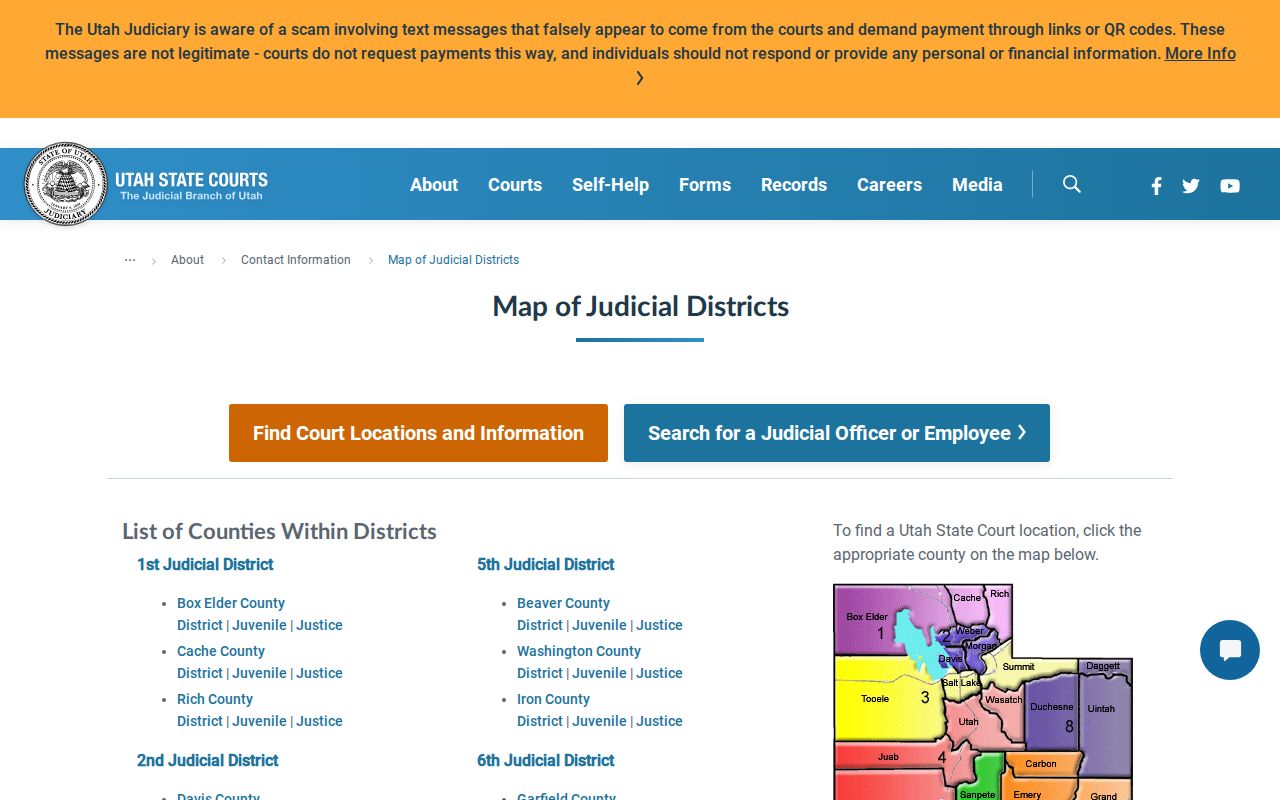
District scope helps you search, but it is no promise that every Cache citation belongs there.
| Court | Dockets | Route |
|---|---|---|
| First District Court | Felony, Class A, civil, probate, district small claims | XChange, calendar, clerk |
| Juvenile Court | Delinquency and child welfare | Juvenile court contact |
| Municipal justice | Traffic, ordinance, lower misdemeanor, small claims | Justice scope and local clerk |
| Utah appellate courts | Appeals and assigned reviews | Appellate docket |
No Cache County Justice Court
Cache County runs no county justice court. Work that would sit in one elsewhere is split between municipal justice courts and First District Court. An old entry's city label can differ from the current court location and the office holding the file. Pick district or justice scope by case type. Then trust the current location field over an old municipal label.
Fiscal-year 2023 figures reported 10,570 new district cases across the three-county First District, not Cache alone, or 21.4 percent above its prior ten-year average. State justice statistics count a different set of courts. Never combine those totals. Workload data explains the system, but it cannot reveal a specific setting, status, or result.
Key point: A county-wide search requires both district and municipal routes because Cache County has no county justice court.
Court Dates in Cache County
The Utah Courts calendar searches by case number, party, judge, attorney, date, court type, and location. A Logan result lists the date, time, in-person or hybrid status, court, caption, judge, room, setting type, and a case-details link. Full calendars refresh at about 5:30 a.m. Even so, a later reset or cancellation can still change a hearing. Lay the calendar beside the newest case history and the notice from court. Call the clerk when they differ. The full workflow sits on the Cache County court schedule. A remote or hybrid marker grants no leave to record a proceeding.
Note: Only the court can confirm that a docketed hearing still stands.
Cache Court Dissolutions Changed Routes
Courthouse arrangements shift while municipal names endure. Smithfield's 2020 Judicial Council record documented an intent to dissolve its justice court. Utah's 2025 Senate Joint Resolution 1 then approved dissolution of the North Logan and Hyde Park justice courts no later than April 1, 2025. Their workload moved to First District Court. A city caption may now point you toward Logan for the hearing. The official dissolution resolution records the shift.
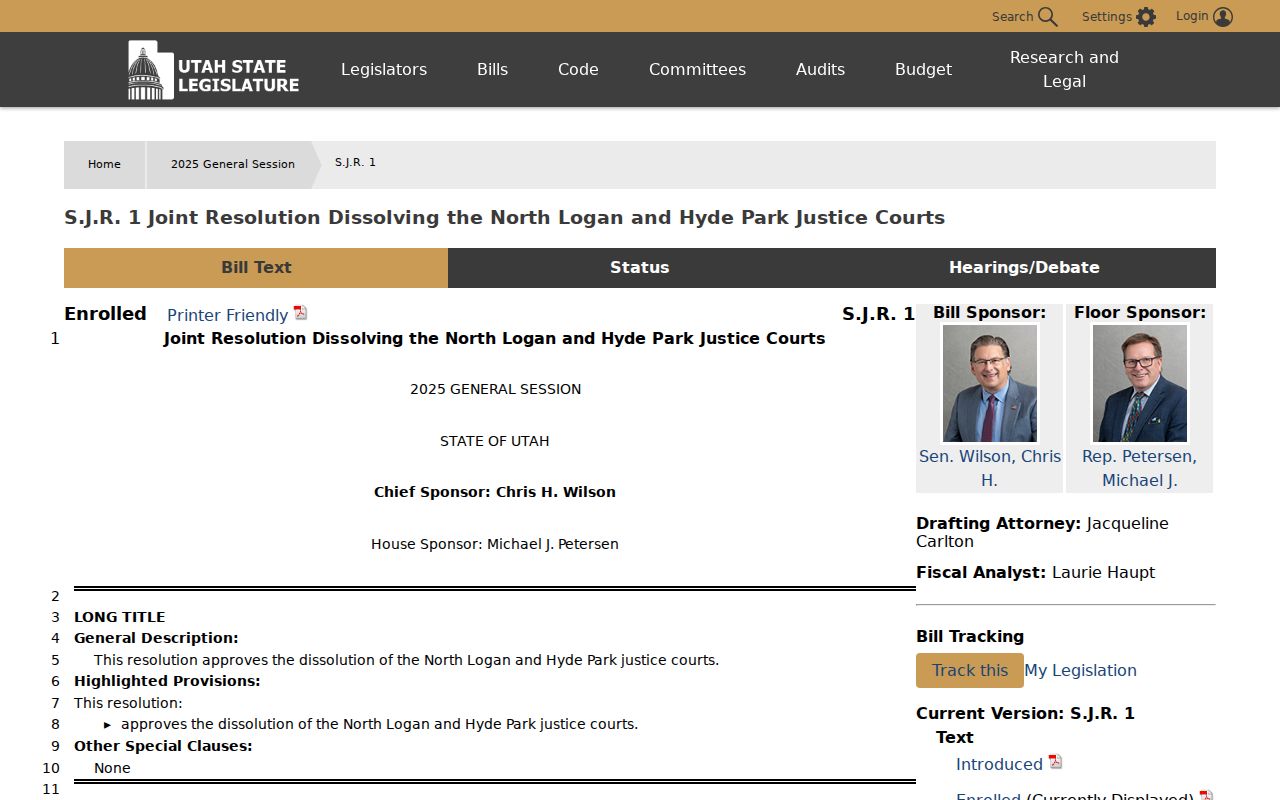
Search both justice and district scopes, read the present location field, and verify the assignment before you travel.
Docket Access Under Utah Law
Utah sets its own rules for court records. The Utah Code of Judicial Administration does the classifying, with UCJA 4-202.02 sorting records into categories. Rule 4-202.03 and Rule 4-202.04 handle sealed access and classification requests. Redaction duties fall to Rule 4-202.09. GRAMA, by contrast, covers government records outside the judiciary, so it is not the tool for a Cache County court docket. One more caution: a record can be public and still cost money to view online.
Expect gaps in a Cache County docket search. Juvenile, adoption, protected-order, competency, expunged, sealed, and some domestic records may simply be absent. A blank result can also mean the case was just filed, the search scope was wrong, a name was misspelled, or the record predates the online system.
Key rules:
UCJA 4-202.02 classifies public and restricted records.
UCJA 4-202.03 limits access to sealed records.
UCJA 4-202.09 addresses redaction duties.
Older Cache County Dockets
Online docket coverage has a starting line. Logan District Court CORIS data reaches back to August 18, 1997. Justice court conversions happened on their own schedule. Public district images generally cover electronically filed documents from July 1, 2010. They appear only when an image exists and the filing is public. Many old records never made it online at all, so plenty of older Cache County court records sit outside the web system.
The Utah State Archives describes district series going back to 1896. Those series include minutes, registers of actions, docket books, orders, judgments, probate books, and files. Most sit with the creating court for about fifty years. Any transfer comes later. To chase an old Cache County case file, confirm the court first. Then try a terminal. Submit a specific request. Ask whether the file moved to archives.
How the Clerk Keeps Dockets
Records staff at the Cache County/Logan District Court work within the unified Utah State Courts. They keep the district dockets. They also route requests for inspection, documents, certification, and recording. Do not confuse them with the Cache County Clerk's Office. That office holds county-government records rather than court ones. Each active municipal justice clerk keeps that city's own court record. The official Cache courthouse page lists the local contact.
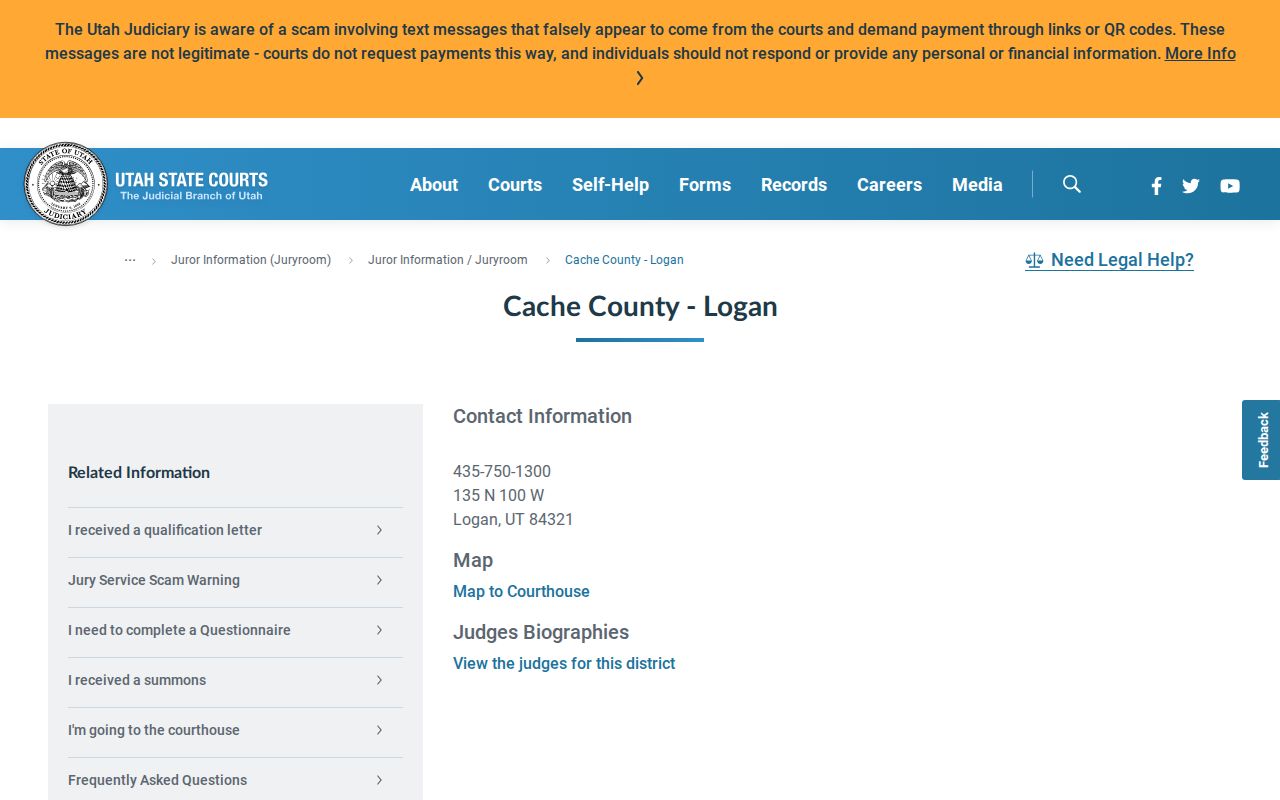
This is the district counter fallback for older files, setting checks, and certified copies.
Cache County Court Directory
Utah Courts runs a dynamic directory rather than a static page naming one district clerk. You filter by county, court type, district, and location to find the right team. That matters after court consolidation. It also matters when municipal and district offices share Logan. Staff assignments can change. Check the directory before visiting. The official Cache court directory shows the current path.
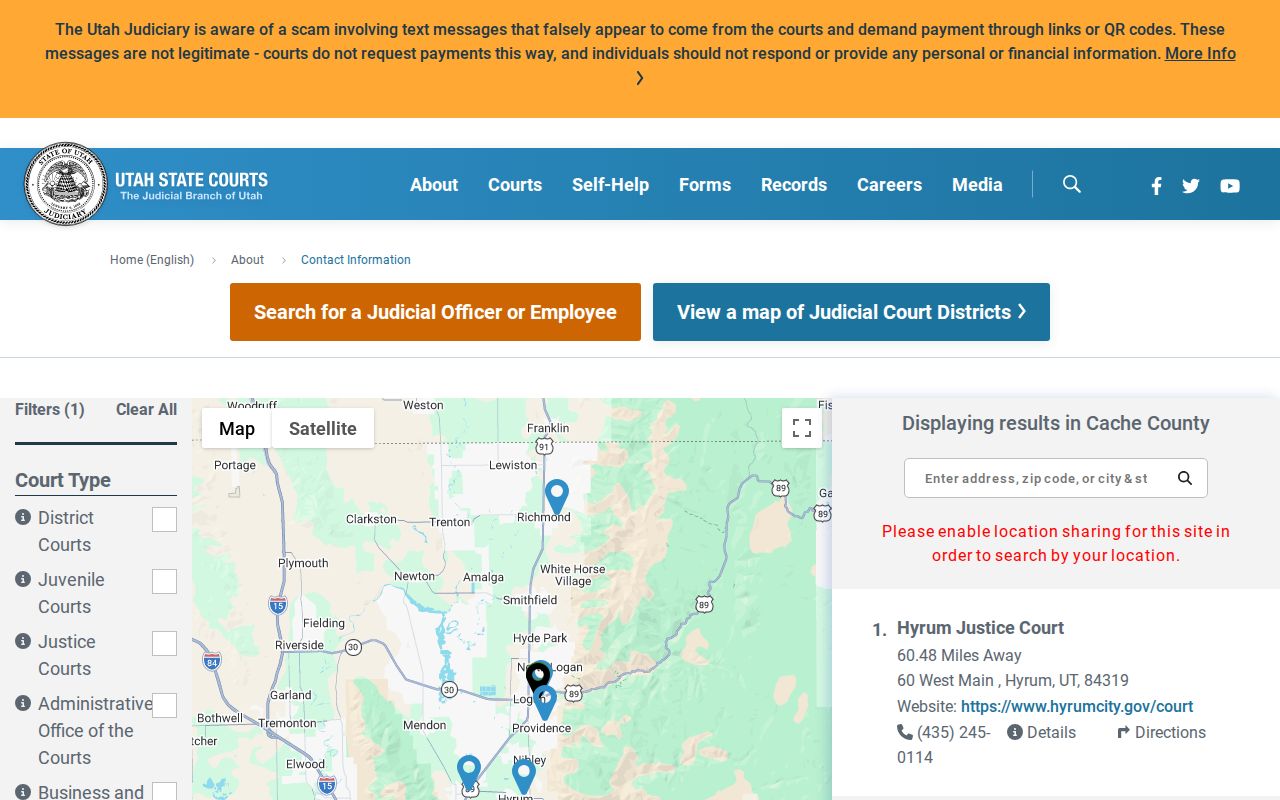
If the first view is blank: pick a court type and location instead of assuming no clerk exists.
Free Cache Docket Terminals
Web XChange charges guests and plan users. But most district courts and some justice courts give free public XChange access on courthouse terminals. The terminal shows the public history of a Cache County court docket. That view costs nothing. Images, copies, and staff research may still cost extra. And a terminal cannot open a private, sealed, expunged, or juvenile record. The Utah Courts terminal page describes the free access.
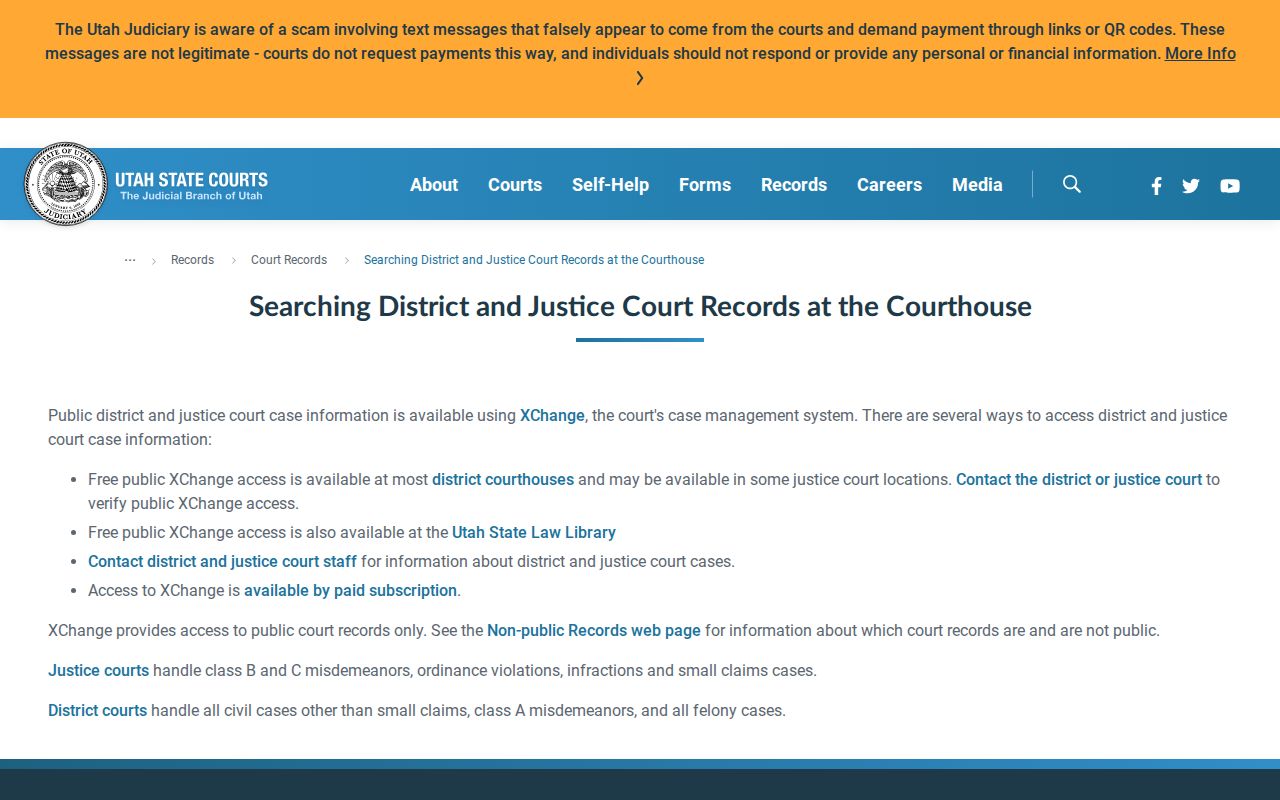
Call ahead before making a special trip. The State Law Library offers a computer fallback, though it cannot certify a Cache County record.
Cache Docket Copy Fees
A docket view, an image, and a certified copy are three different things. XChange guest terms list a $10 one-time fee, $0.20 searches, and $1 public images. A monthly plan runs $25 setup plus $40 monthly, with 500 searches included. Each excess search costs $0.35. Terminal review at the courthouse stays free.
Formal requests cost more. Paper runs $0.25 per sheet. Certified copies are $4 per document plus $0.50 per page. Exemplified copies run $6 per document plus $0.50 per page. Audio or video costs $15 per half day of testimony. The clerk quotes any mail, media, or research charges.
| Product | Amount |
|---|---|
| XChange search | $0.20 |
| Public image | $1 per document |
| Paper | $0.25 per sheet |
| Certified | $4 plus $0.50 per page |
| Exemplified | $6 plus $0.50 per page |
City-by-City Court Dockets in Cache County
By the 2020 Census, the five largest cities are Logan, Smithfield, North Logan, Hyrum, and Providence. Logan has district, juvenile, and city justice routes for court dockets. Hyrum and Providence each have a justice path. North Logan dissolved its court in 2025, and Smithfield has a prior dissolution history too. Always confirm the current court location first. That matters for any Cache County case lookup.
Logan Court Records
52,778 · District, juvenile, and justice routes.
Smithfield Court Records
13,571 · Verify its post-transition location.
North Logan Court Records
10,986 · Cases may route to Logan.
Hyrum Court Records
9,362 · Justice and district routes differ.
Providence Court Records
8,218 · Providence justice remains distinct.
First District Cache Resources
The First District page collects judges, local forms, standing orders, and court administration in one place. Keep the roles straight. Forms and e-filing create court filings. XChange holds the public history after accepted public material reaches the record. Utah District Court Electronic Filing itself is not a public search tool. The First District Court page gathers these resources.
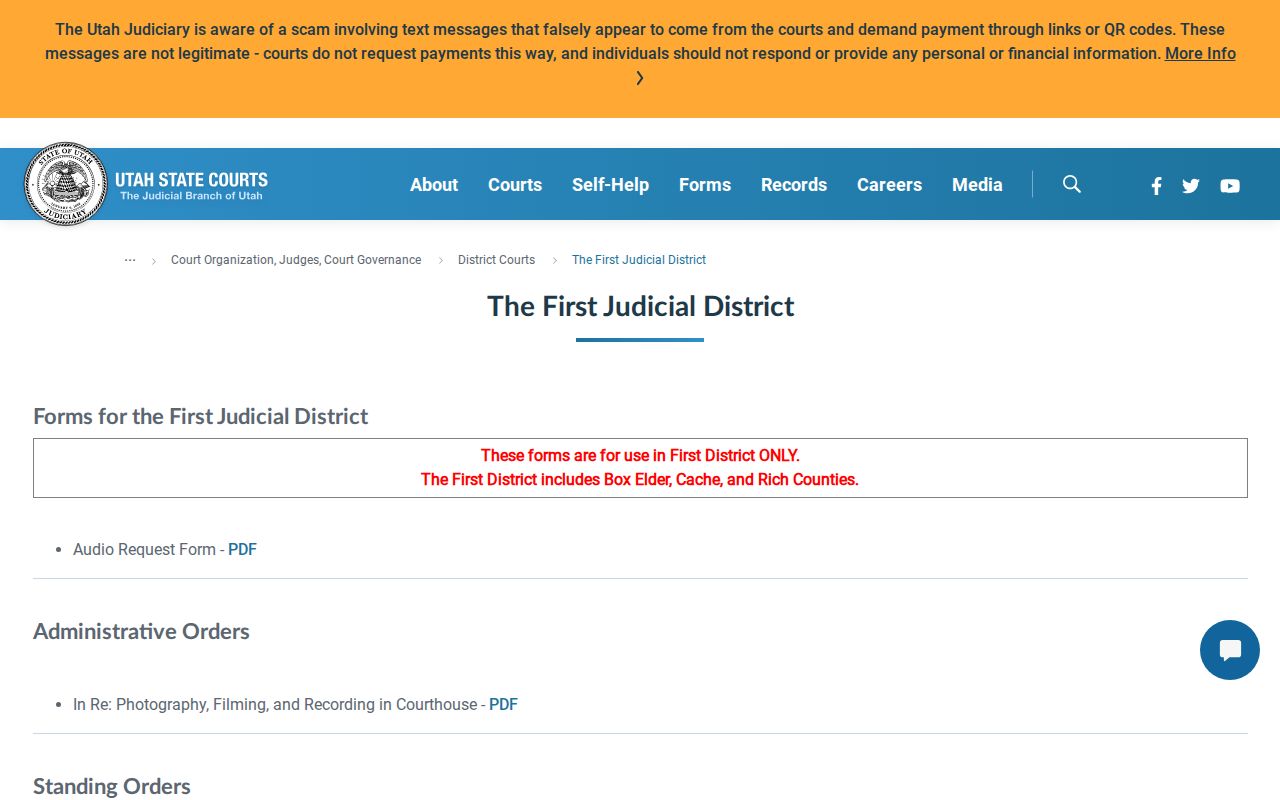
Use that page for administration, then turn to XChange, the calendar, or the clerk for a specific Cache County case.
Cache County Filing System Path
Two systems serve two different crowds. Attorneys file covered district civil, domestic, probate, and criminal papers through the Utah District Court Electronic Filing System or an approved provider. Self-represented civil filers may have mail, email, counter, or MyCase routes. Utah Courts describes the right route for their case. Only after an accepted filing becomes part of a public court record might its event appear in XChange. Filing a paper does not grant instant public access. Sealed material stays sealed even when submitted online.
That gap explains why a submission receipt and the public Cache County court docket may disagree for a while. Utah guidance says a rejected filing does not keep its filing date. An approved document, meanwhile, cannot simply be deleted. The clerk must process the submission first. Access rules apply before a public user should trust a docket event. Anyone tracking an urgent deadline should rely on the filing confirmation. Then call the court. Do not wait for a public screen to update.
For public lookup, use XChange, the calendar, a courthouse terminal, or records staff. For a pleading, follow the filing channel that fits the filer and the case type. Mixing those systems invites needless fees and missed steps.
Map and Directions to the First District Court, Logan
Cache County's felony, Class A misdemeanor, general civil, domestic, probate, and district small-claims cases are filed at the First District Court, 135 N 100 W in Logan, the county seat. Because Cache County has no county justice court, this is the single district-level hub for the county, even though several cities keep their own municipal justice courts for traffic, ordinance, and lower-level matters. Confirm district versus justice jurisdiction with the clerk before treating a city caption as proof of where the file now sits.
No official page states courthouse parking, security-screening, or floor-plan details, so call ahead, especially if bringing recording equipment or requesting a same-day file inspection or an interpreter.