
Cache County Court Record Requests
Two different offices hold the records you might need. The Cache County/Logan District Court clerk keeps district, domestic, probate, and felony case records, plus Class A misdemeanors and qualifying Cache County small claims. A city justice court clerk keeps its own traffic tickets, infractions, misdemeanors, and small-claims files. County-government records and GRAMA requests go through the Cache County Clerk, but that office does not publish the First District case history.
Work through the channels in the order that fits your need. Start with XChange, which shows public case history and any eligible images. The public calendar lists upcoming settings. From there you can call the court that maintains the case, stop at its counter, use its free public terminal, or send a written request the way that court confirms it accepts. Approved requests may come back by mail or email. Older files sometimes route to the Utah State Archives.
- Identify the court, case number, parties, and exact record.
- Inspect XChange or a courthouse terminal when public electronic access is enough.
- Call the court to confirm custody, delivery method, and current charge.
- Submit the Utah Request for Record to the maintaining court.
- Select inspection, plain copies, certified copies, media, or authorized nonpublic access.
- Pay the quoted fee and verify the product when received.
The official court-record request instructions show the judiciary’s request and fee path.
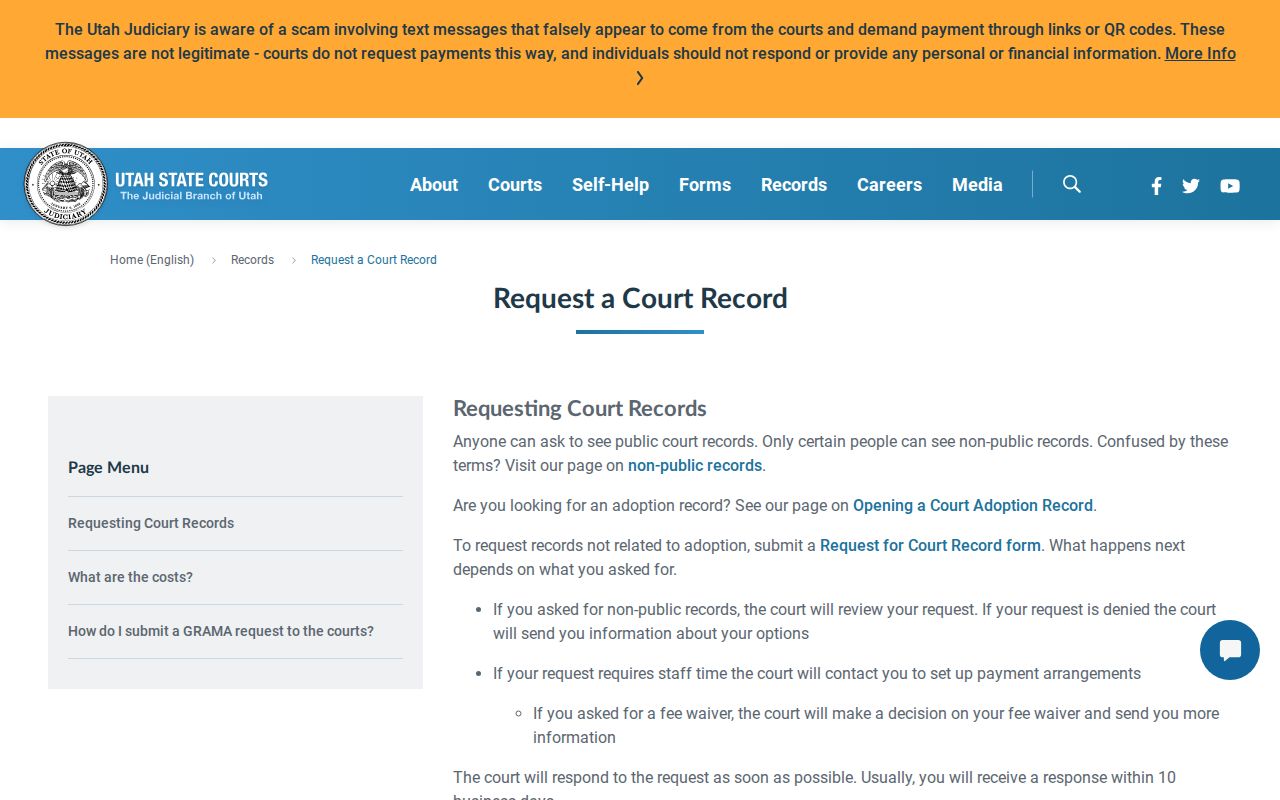
That written-request process is the right fallback. Use it when a docket line has no public image, or when you need a formal product such as a certified copy.
Cache County Clerk Routing
Utah runs one unified state-court system. The official Utah Courts directory lets you filter by Cache County, court type, and district. It is the best place to confirm a current clerk or team listing.
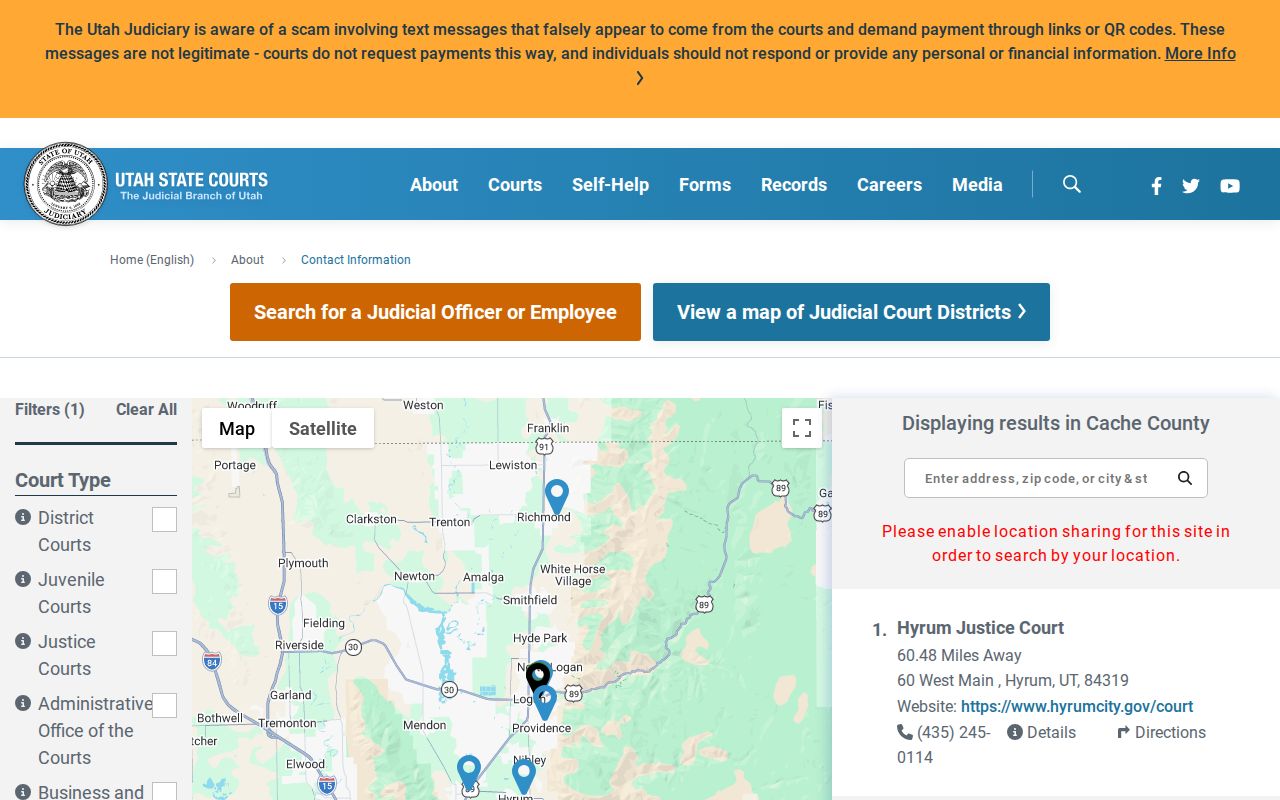
The directory matters because municipal assignments shift, and Cache County has no county justice court.
The official Cache/Logan contact page supplies the local court address and public number.
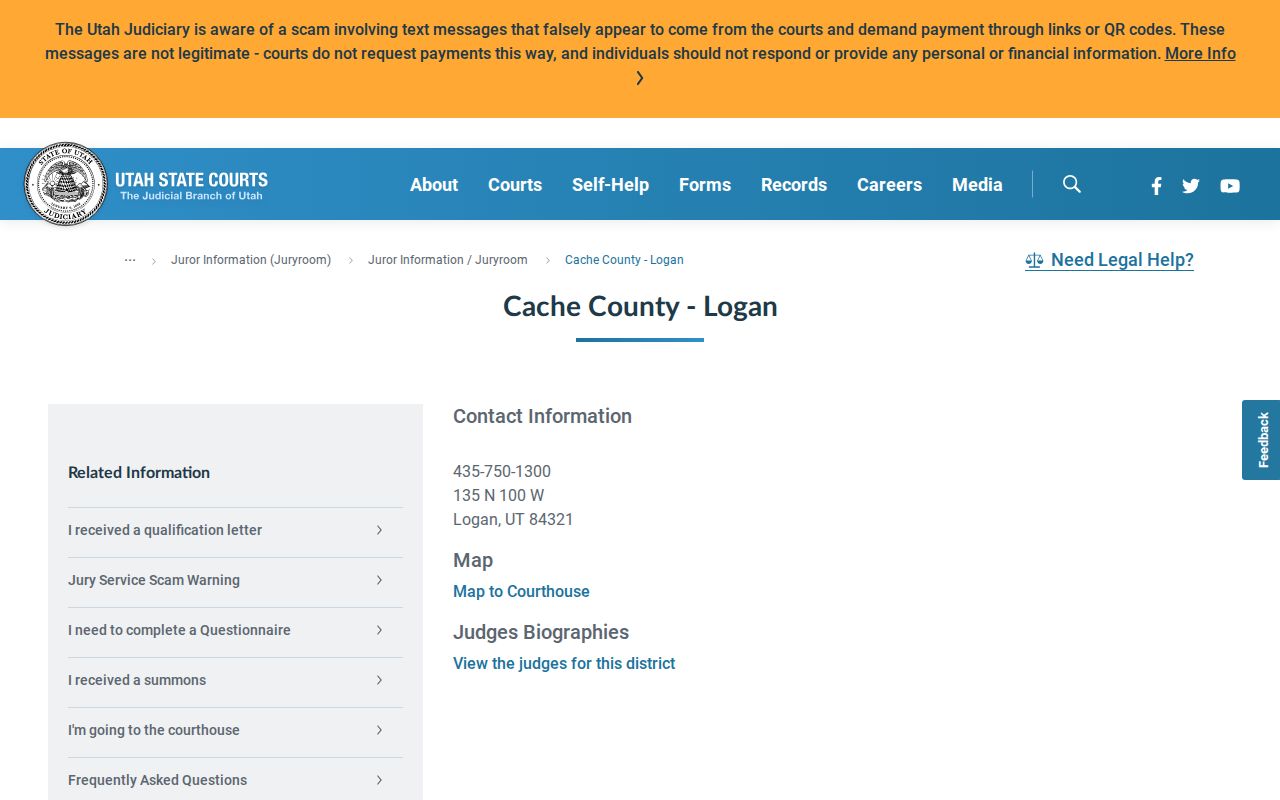
Call the clerk before you travel; the court posts no separate records-counter cutoff or inspection hours.
Kinds of Court Records
One Cache County case can yield several products. Pick the smallest one that fits your need. A case history often traces events well enough, while a signed order or certified judgment requires the underlying paper itself.
- Case summaries and chronological case histories
- Complaints, petitions, answers, motions, briefs, and notices
- Orders, judgments, decrees, warrants, and disposition papers
- Public hearing entries and eligible district document images
- Audio or video of a recorded proceeding
- Historical registers, docket books, minute books, and probate files
District images filed electronically since July 1, 2010 are public and cost $1 per document through XChange. The official XChange form lays out the registration choices.
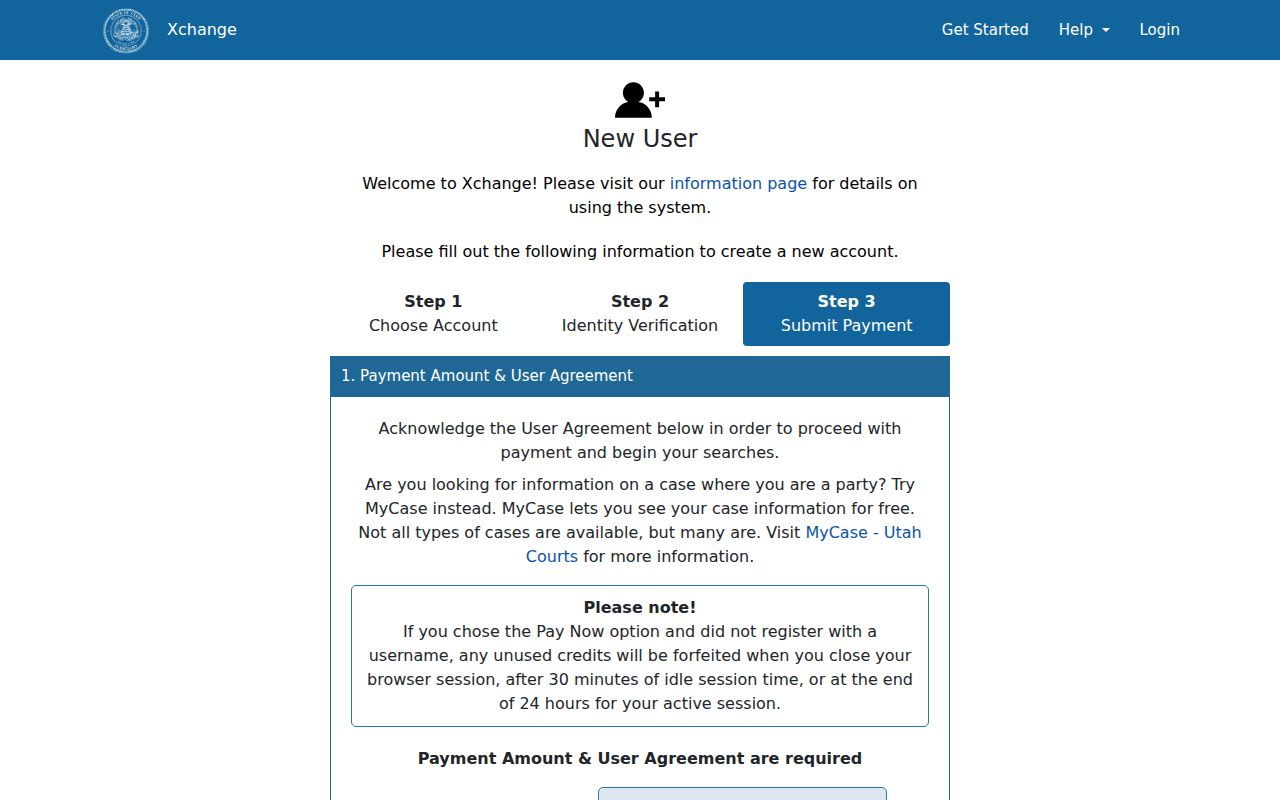
A paid image is still not automatically a clerk-certified copy.
Cache County Request Form
The two-page Utah form asks which judiciary office should receive it. It also wants a reasonably specific description of the records and whether you want inspection or copies. Fill in your name, mailing address, daytime phone, the date, and your signature. Staff find the right Cache County file faster with a case number. The same goes for court, date span, document title, or party names.
Fee waivers and expedited responses each need a written explanation. To request a nonpublic record, state your entitlement: you are the subject, the information provider, or a person authorized with documentation. Asking for "all records" without a legal basis gets you nothing. The judiciary generally responds within 10 business days. That is a response expectation, though, not a promise the file arrives that fast.
Submission check: Confirm the maintaining court and its accepted delivery method before mailing or emailing the form. A county-government address does not automatically route a district case request.
Cache County E-Filing Records
The Utah District Court Electronic Filing System handles covered filings, but it is not a public records portal.
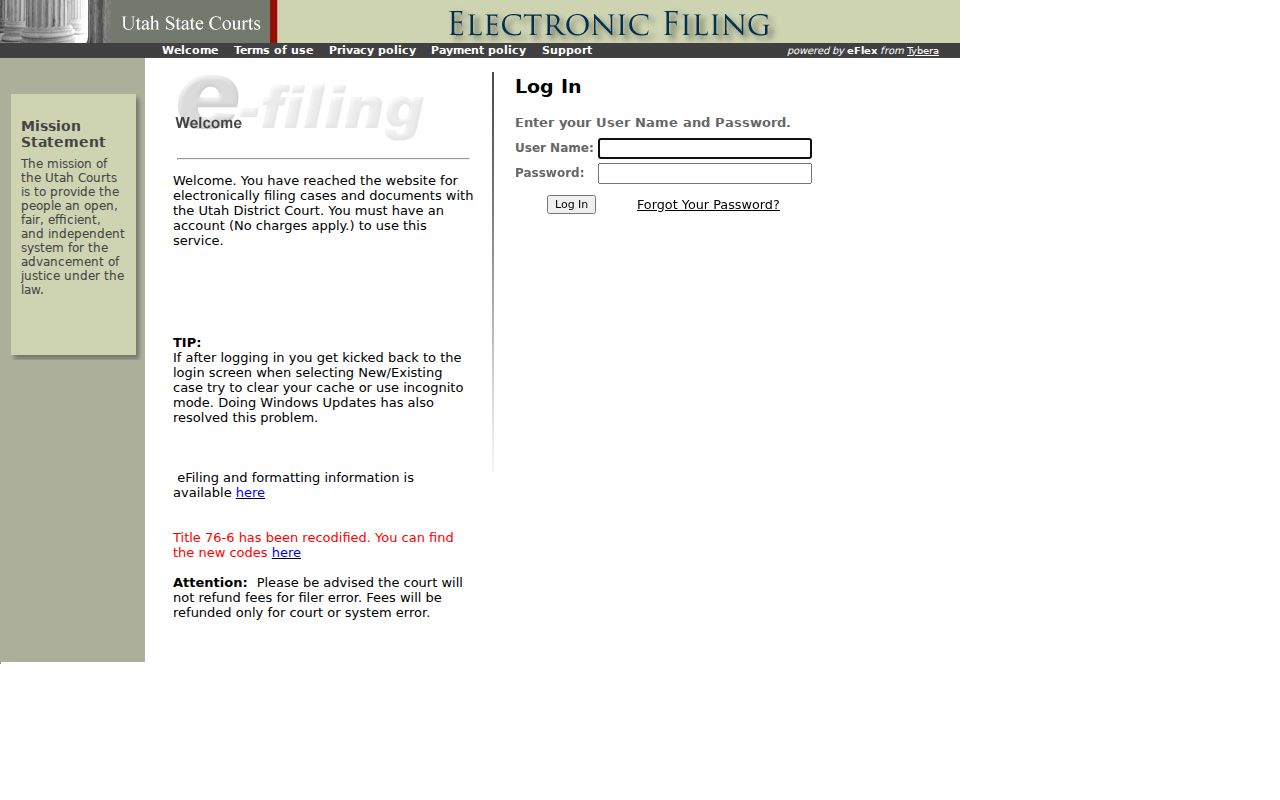
Accepted public filings can later reach XChange; record requests still go to the court.
Court Records: What They Contain
Think of the docket as the index to the file. It shows what was filed and what happened next. A full Cache County court record can add the pleading, order, exhibit, or recording behind each line. What is open varies with case class, date, retention status, and access classification.
| Case identity | Court, location, caption, case number, type, filed date, judge, and status |
|---|---|
| Pleadings | Petitions, complaints, answers, motions, notices, and responses |
| Proceedings | Hearings, settings, minutes, rulings, and chronological case events |
| Orders | Signed judgments, decrees, warrants, and disposition documents where public |
| Financial entries | Fees, fines, payments, balances, trust, or judgment accounting when entered |
| Media and exhibits | Separately held recordings and exhibits subject to custody and access limits |
Not every docket event has an image. For a complete file, name the documents you want and let the clerk say what remains in custody.
Cache County Audio Records
Utah district, juvenile, and appellate courts are courts of record, with digital storage dating to 2001. To request a Cache District recording, write to cache_po@utcourts.gov, and the court will contact you about cost. The official digital recording page describes the products: data video, audio-only data, and audio CD.
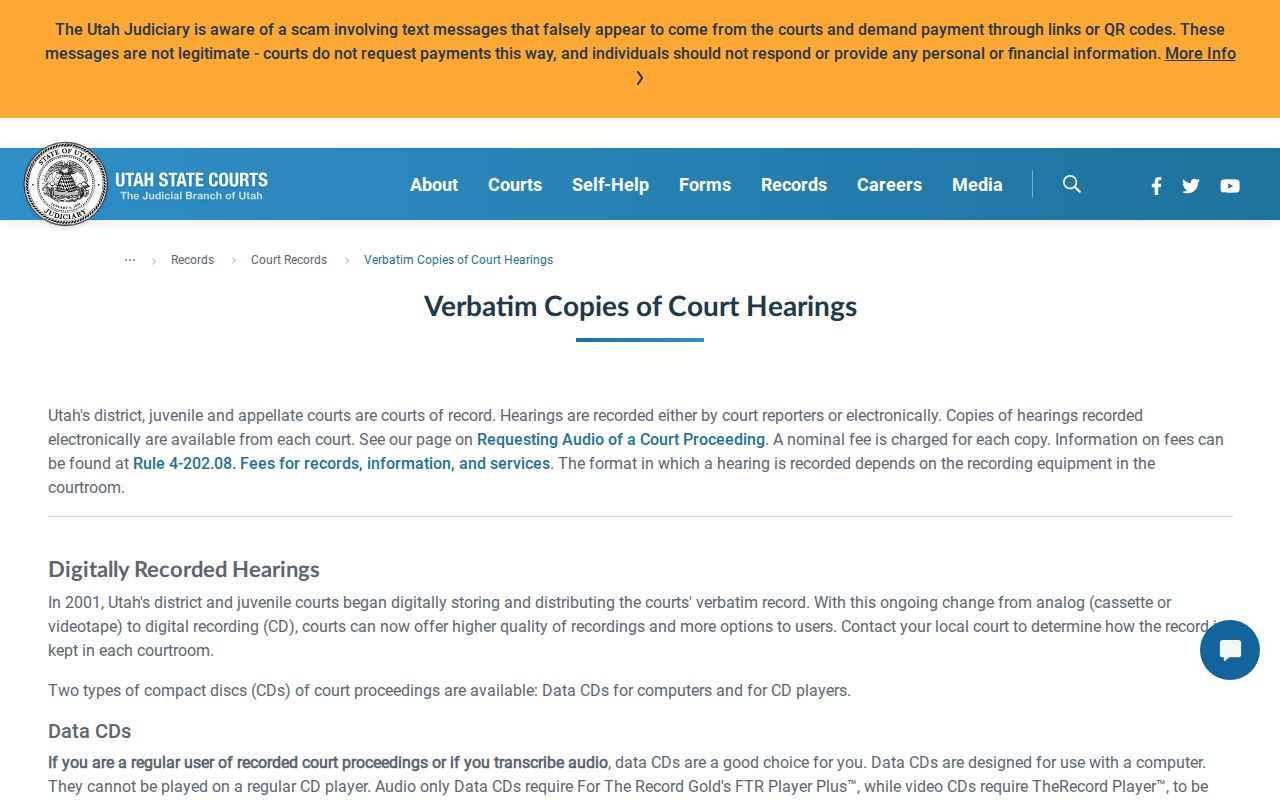
Recordings move on their own track, separate from XChange. A calendar entry or case history is not the hearing audio. Current guidance sets $15 per half day of testimony. A data video holds up to five hours. Audio-only data holds up to 27 hours. An audio CD holds up to 80 minutes. Transcripts and exhibits follow their own retention and custody rules, so name the proceeding date and court exactly.
Copy Fees and Certification
A plain copy just reproduces the record. A certified copy adds the clerk's authentication, and an exemplified copy carries a higher form of certification. The Utah Courts fee page posts current statewide charges; check it again when you order.
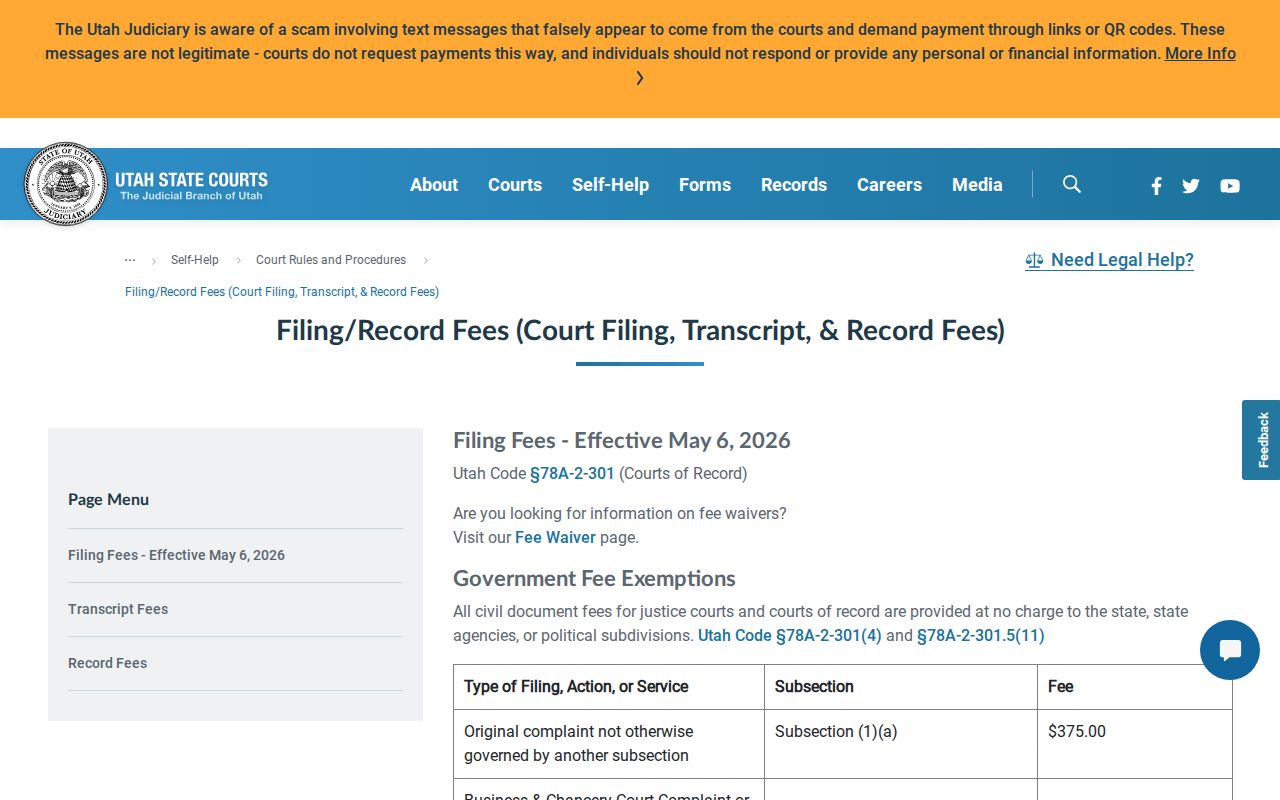
The published schedule separates copy products from filing fees used to start a case.
| Product | Current amount |
|---|---|
| Plain paper under request page | $0.25 per sheet |
| Certified copy | $4 per document plus $0.50 per page |
| Exemplified copy | $6 per document plus $0.50 per page |
| XChange public image | $1 per document where available |
| Audio/video proceeding | $15 per half day of testimony |
| Fax or email | $5 through 10 pages, then $0.50 per page |
| Actual mailing cost |
Utah Courts will not fax or email records already available through XChange. Research beyond 15 free minutes may be billed at the published rate for the least costly suitable staff member.
Cache County Archive Timeline
Old Cache County court records that predate computers live in two places. The Utah State Archives holds district court series reaching back to 1896. Those series span minute books, registers of actions, docket books, orders, judgments, probate books, and case files. Coverage gets thinner as you move forward in time. Logan District CORIS entries begin August 18, 1997. Digital recordings started in 2001. Public XChange document images generally cover eligible district e-filings from July 1, 2010 onward.
A case file usually sits with the court that created it for roughly 50 years before any transfer. Retention schedules vary. So ask the Logan court first whether it still holds the file you want. Only then approach the Archives. For records still in Logan, the courthouse offers a free public XChange terminal. The CORIS public terminal page explains it for visitors.
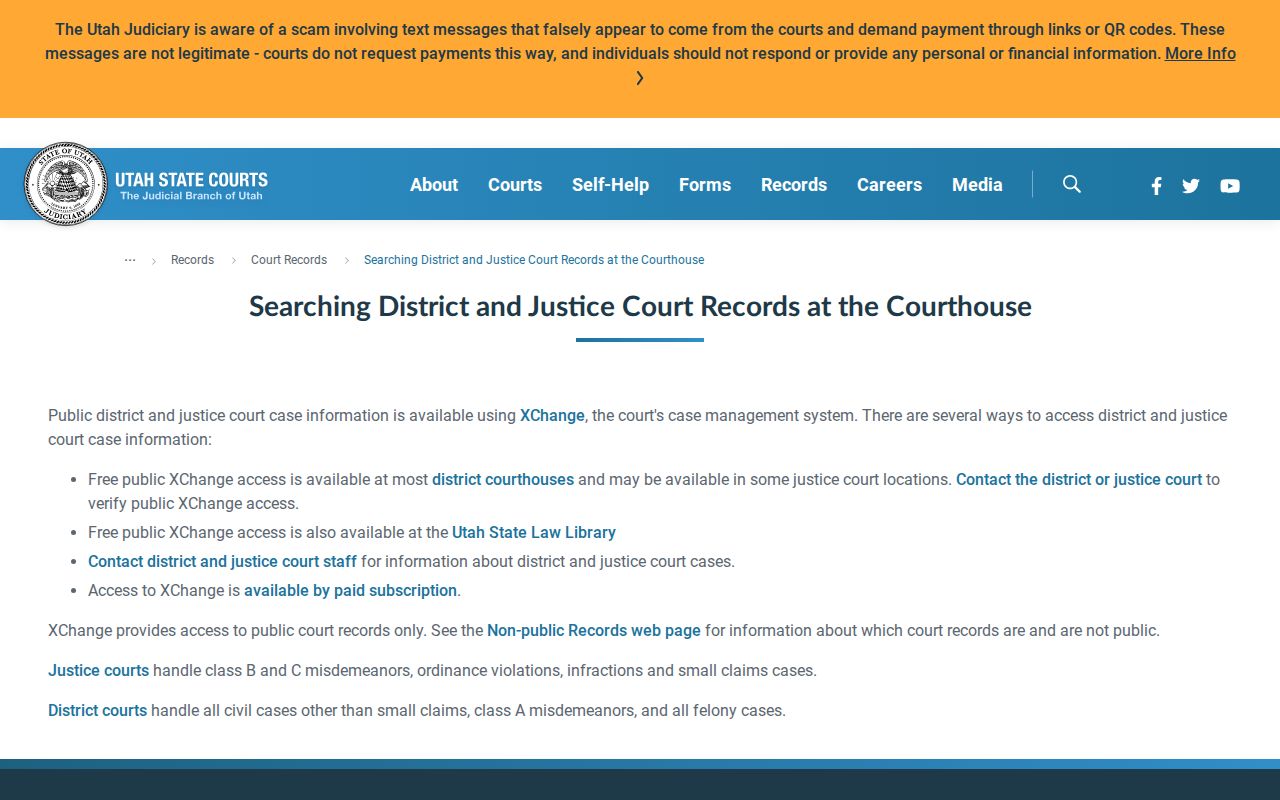
A terminal covers electronic inspection only. Paper custody and historical transfers still call for confirmation from the clerk.
Cache County Redaction Duties
Open access does not cancel the duty to shield personal identifiers. UCJA Rule 4-202.09 governs redaction in Utah courts. The state's e-filing guidance puts the first responsibility on filers and parties themselves. The clerk simply does not screen every paper for every identifier. That rule text spells out the redaction duties.
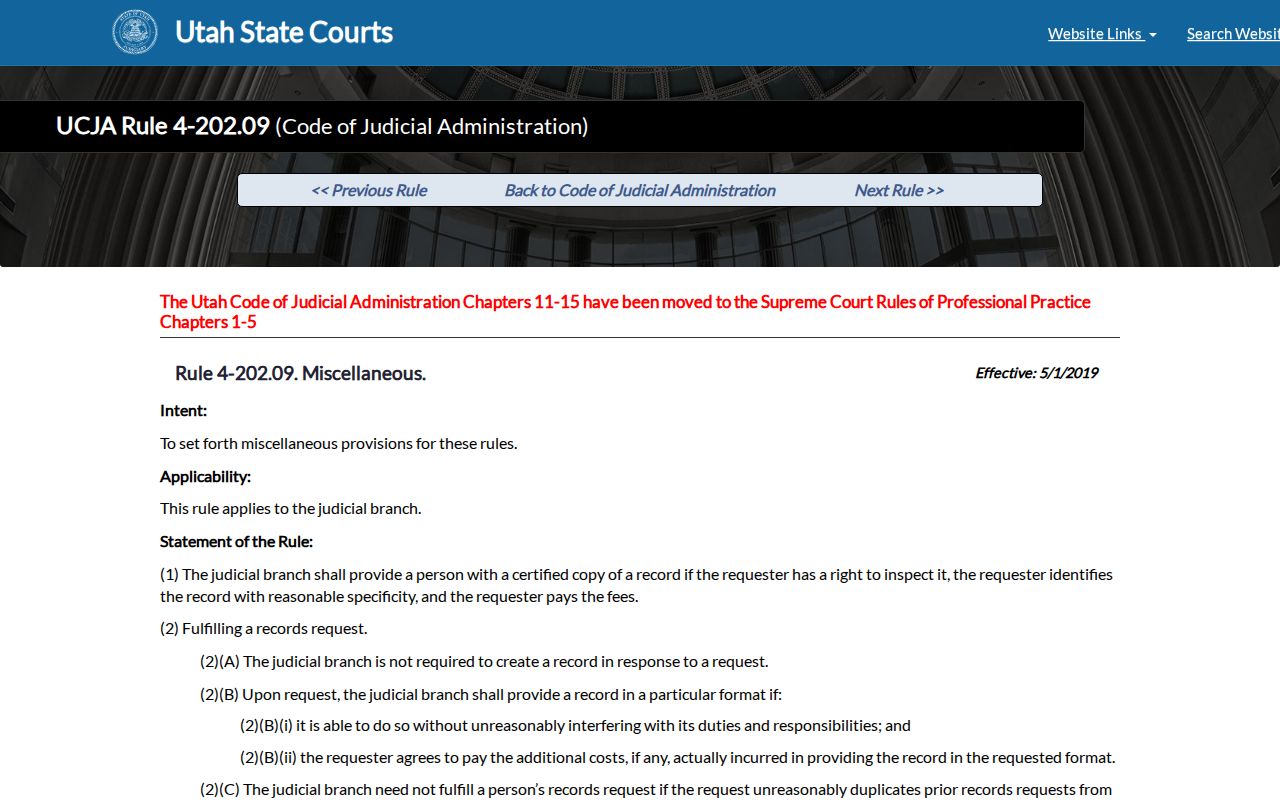
One caution for readers. Just because a birth date, address, account number, or victim detail appeared on a public screen does not make it fair game to republish.
Access Rules for Court Records
UCJA Rule 4-202.02 sorts Utah court records into public, private, protected, sealed, and other restricted classes. That single page holds the definitions a clerk relies on. Before any Cache County docket entry is released, the rule decides which class it falls into.
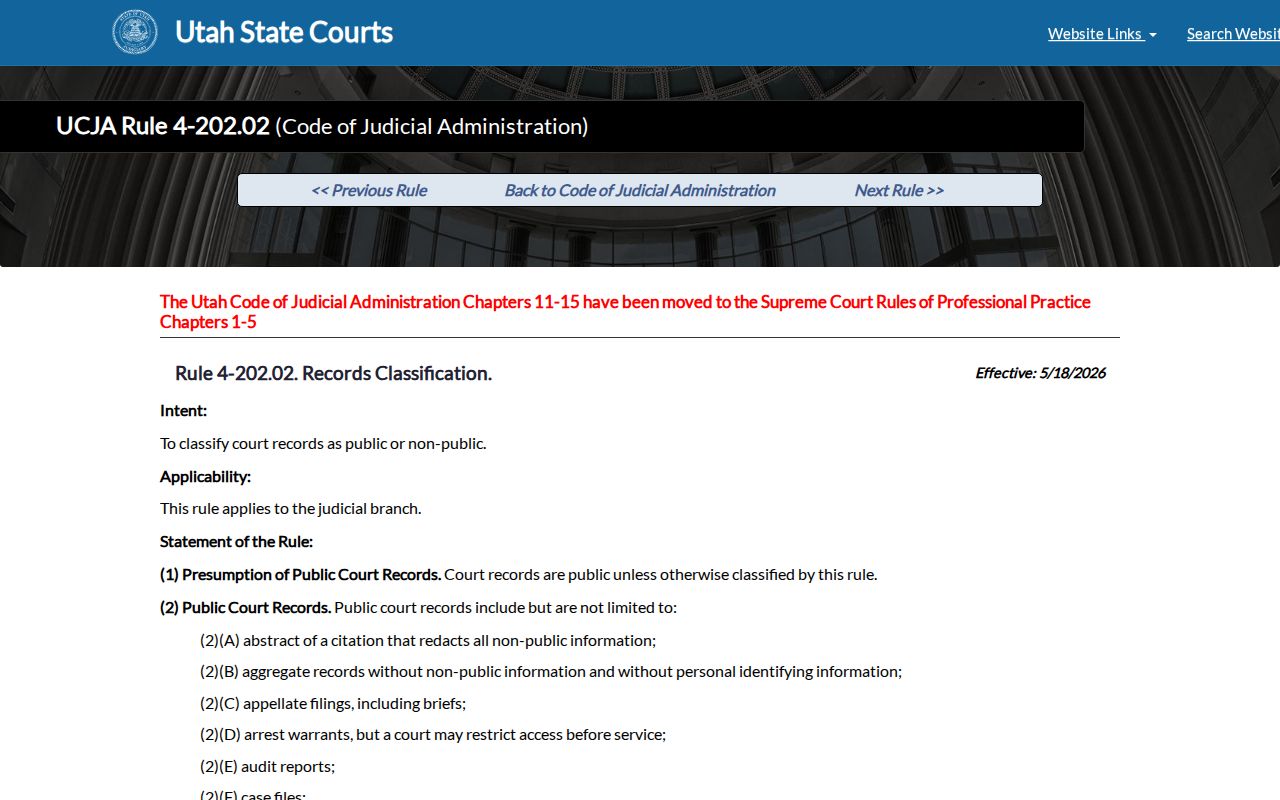
Indexes, calendars, case files, judgments, orders, and records of open hearings stay public in a Cache County court docket, except where the rule lists specific exceptions.
Key Utah rules:
Rule 4-202.03 permits any person to access public records and sets authorization paths for private records.
Rule 4-202.04 provides a motion or petition process for access to a nonpublic record.
Utah GRAMA supplies the broader public-record framework, while the judiciary uses its court-specific process.
The official sealed-access page illustrates that a different portal cannot bypass the governing rule.
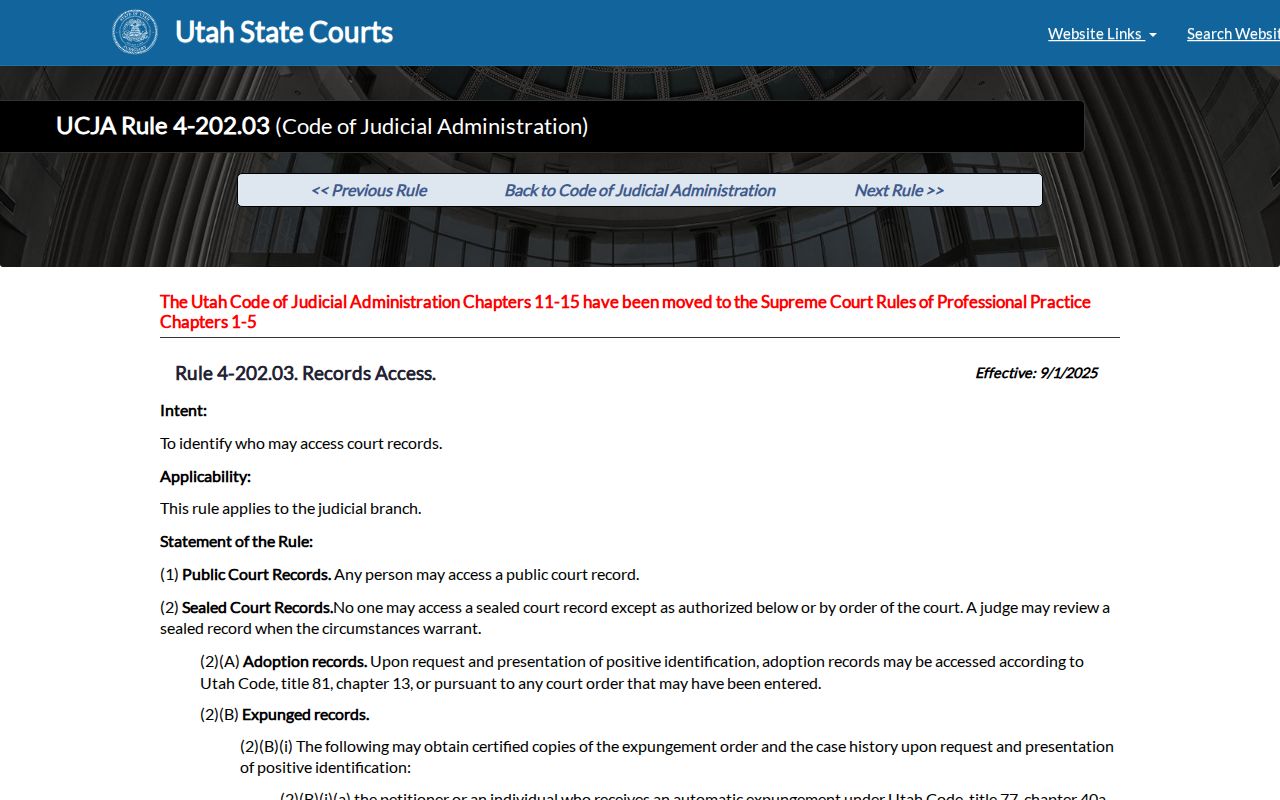
When a court record is not public, bring proof of entitlement, written authorization, or a court order before the clerk can release the file.